Explore Jean-Jacques Rousseau’s ideas on the general will, social contract and popular sovereignty and their lasting influence on modern democracy.
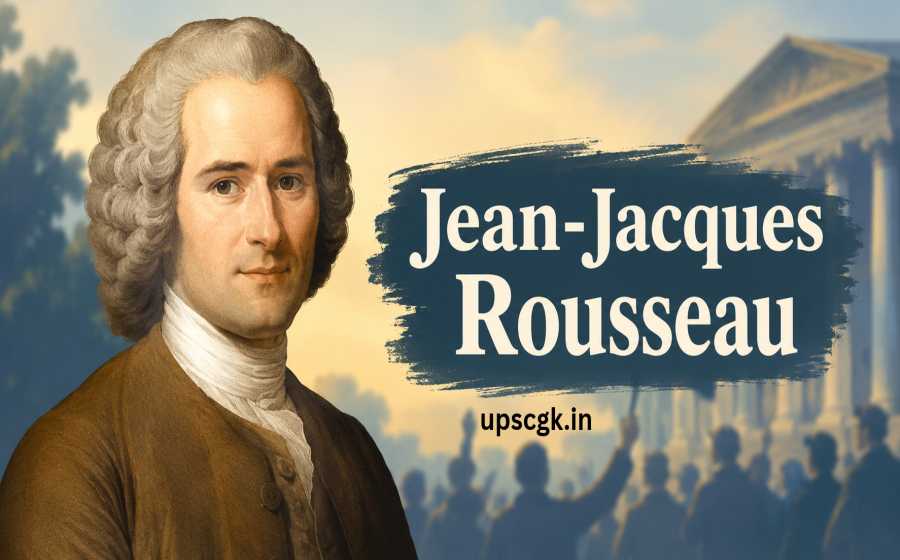
Jean-Jacques Rousseau
Jean-Jacques Rousseau was one of the most influential political philosophers of the eighteenth century. His ideas about freedom, equality, democracy and legitimate government played an important role in the development of modern political thought. Rousseau challenged the belief that political authority should depend on tradition, inherited privilege or the power of rulers. Instead, he argued that legitimate government must be based on the people and directed towards the common good.
His major political ideas are explained in The Social Contract, published in 1762. Three central concepts associated with his philosophy are the social contract, the general will and popular sovereignty. These ideas helped shape discussions about democratic government, citizenship, political equality and the relationship between individuals and the state.
Table of Contents
Who Was Jean-Jacques Rousseau?
1712-1778 | Genevan philosopher and political thinker
Jean-Jacques Rousseau was born in Geneva in 1712 and became a major figure of the European Enlightenment. He wrote about politics, education, society and human nature. Unlike thinkers who viewed existing social institutions as essential foundations of order, Rousseau questioned whether social inequality and political authority were always justified.
In his 1755 work Discourse on the Origin and Basis of Inequality Among Men, he examined how social development and property relations contributed to inequality. Later, in The Social Contract, he explored how people could establish a political community that protected freedom while creating legitimate collective authority.
Rousseau’s political philosophy became an important influence on democratic thought and the intellectual background of the French Revolution, although the revolution itself had multiple causes and influences.
The Social Contract Theory
The social contract is the foundation of Rousseau’s political philosophy. In The Social Contract (1762), he asks how people can form a political society without losing their freedom.
According to Rousseau, legitimate political authority cannot rest simply on force, inherited power or the personal wishes of a ruler. Instead, individuals must come together through a collective agreement to establish a political community.
Through this agreement, individuals become members of a body politic and accept common laws. The purpose is not to place everyone under the arbitrary control of another person but to create a society in which freedom and collective responsibility can coexist.
Rousseau’s central argument is that legitimate government must derive its authority from the people themselves. The social contract establishes the political community, while the general will guides its laws towards the common good.
The Concept of the General Will
The general will (volonté générale) is one of Rousseau’s most important and debated political concepts. It refers to the collective will directed towards the common interest of the political community.
Rousseau distinguishes the general will from the will of all. The will of all is the sum of individuals’ private preferences, whereas the general will concerns what citizens share as a common interest.
For example, citizens may disagree about individual benefits from public spending. However, they may collectively support fair laws, public safety and equal treatment because these serve society as a whole.
The general will is not automatically identical to whatever a majority happens to demand. Rousseau’s ideal requires citizens to consider the common good rather than allowing private interests or powerful factions to dominate political decisions.
His concept has influenced discussions of civic responsibility and participatory democracy. However, critics argue that identifying the true general will can be difficult and that political leaders might wrongly claim to represent it to justify suppressing dissent.
Popular Sovereignty
Popular sovereignty means that the ultimate authority to make laws belongs to the people. Rousseau rejected the idea that sovereignty could legitimately be transferred permanently to a monarch or another independent ruling authority.
In his theory, citizens collectively constitute the sovereign body. They are not merely subjects who obey laws created by someone else; they are also members of the political community responsible for establishing its laws.
Rousseau considered sovereignty to be inalienable and indivisible. It cannot be permanently surrendered to another person, nor can the people’s sovereign authority be divided into separate sovereign powers without undermining its essential character.
He also distinguished sovereignty from government. Sovereignty belongs to the people as a collective body, while government administers the state and implements its laws.
Rousseau’s position differs from modern representative democracy, in which elected legislatures generally make laws on behalf of citizens. His emphasis on direct popular participation nevertheless remains influential in debates about referendums, citizen assemblies and democratic accountability.
Freedom, Equality and the Common Good
Rousseau sought to reconcile individual freedom with obedience to collective laws. He argued that political society should replace unrestricted natural freedom with civil freedom protected by common rules.
He also described moral freedom as living under laws that citizens prescribe to themselves as members of the sovereign community.
Equality was equally important to his political thought. Rousseau believed that extreme inequalities could allow wealthy or powerful individuals to dominate others and undermine genuine political independence. A legitimate political community therefore requires conditions that support equal citizenship and prevent private power from controlling public decisions.
However, Rousseau’s theory contains tensions. His claim that citizens may be “forced to be free” when compelled to obey the general will has raised concerns about individual liberty and the treatment of dissenting minorities. His political writings also excluded women from equal participation in sovereignty, a limitation that later feminist thinkers criticised.
Rousseau’s Influence on Modern Political Thought
Rousseau’s ideas contributed to the development of democratic and republican political traditions. His emphasis on popular sovereignty, political equality and the legitimacy of government helped shape debates surrounding the French Revolution and later democratic movements.
His influence can be seen in discussions about constitutional authority, citizen participation, public interest and the responsibility of governments to the people.
Nevertheless, Rousseau’s ideas should not be treated as a complete blueprint for modern democracy. His criticism of political representation and the ambiguities surrounding the general will remain subjects of debate among political philosophers.
His lasting contribution lies in raising a fundamental question: how can political authority be legitimate while citizens remain free and equal?
Summary
Jean-Jacques Rousseau made a lasting contribution to political science through his theories of the social contract, general will and popular sovereignty. He argued that legitimate government must be rooted in the collective authority of citizens and directed towards the common good.
Although aspects of his philosophy remain controversial, his ideas continue to influence debates about democracy, freedom, equality and political legitimacy. Rousseau’s work remains essential for understanding the relationship between citizens and the state in modern political thought.
Also Check: Political Science