Explore the Iron Age in India, its emergence, key features, major cultures, technological advances and historical impact on ancient Indian civilization.
Iron Age in India
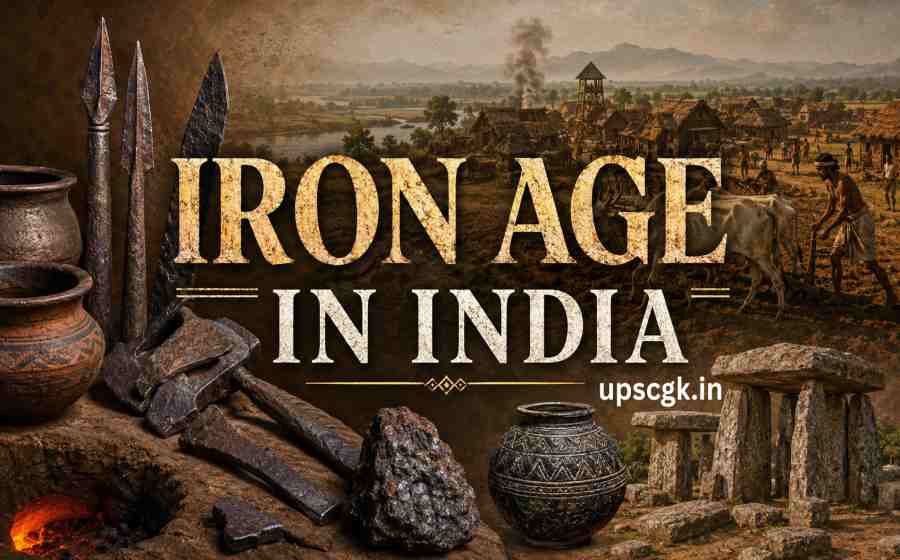
The Iron Age in India marks one of the most significant phases in the country’s ancient history. It represents the period when iron replaced bronze and stone as the primary material for making tools and weapons. The widespread use of iron transformed agriculture, warfare, trade, and settlement patterns, paving the way for the rise of large kingdoms and urban civilizations.
The Iron Age in India generally began around 1200 BCE, although its exact timing varied across different regions. Archaeological discoveries indicate that iron technology developed independently in some parts of the Indian subcontinent while also benefiting from technological exchanges. This period laid the foundation for the emergence of powerful states known as the Mahajanapadas, the spread of new religious ideas, and the beginning of the Second Urbanization. This era is therefore regarded as a turning point that significantly shaped India’s political, economic, and cultural development.
Table of Contents
What is the Iron Age?
The Iron Age refers to the period when societies began producing and using iron extensively for making agricultural implements, household tools, weapons, and construction materials.
Compared to bronze, iron was:
- Stronger and more durable
- More abundant in nature
- Less expensive to produce in large quantities
- Better suited for clearing forests and cultivating land
The adoption of iron technology led to major improvements in productivity and social organization across ancient India.
Beginning of the Iron Age in India
Most historians believe that the Indian Iron Age started between 1200 BCE and 1000 BCE, although some archaeological sites suggest even earlier evidence of iron use.
Important excavations have revealed early iron artifacts from regions such as:
- Eastern Uttar Pradesh
- Bihar
- Madhya Pradesh
- Rajasthan
- Karnataka
- Telangana
- Tamil Nadu
The spread of iron technology gradually covered the Gangetic plains, central India, and the Deccan plateau, allowing agricultural expansion into previously forested areas.
Major Archaeological Cultures of the Iron Age
Several regional cultures are associated with the Indian Iron Age.
1. Painted Grey Ware (PGW) Culture (1200–600 BCE)
The Painted Grey Ware Culture flourished mainly in the western Gangetic plains.
Key Features:
- Fine grey pottery decorated with black geometric designs
- Iron tools and weapons
- Agriculture and animal husbandry
- Small fortified settlements
- Associated with the later Vedic period
Many historians link this culture with the regions described in the Mahabharata tradition.
2. Northern Black Polished Ware (NBPW) Culture (700-200 BCE)
The NBPW culture marked the beginning of large urban centres.
Its characteristics included:
- Highly polished black pottery
- Growth of cities
- Expansion of trade
- Coin usage
- Advanced craftsmanship
- Development of large kingdoms
This culture coincided with the rise of the Mahajanapadas and the teachings of Buddhism and Jainism.
3. Megalithic Culture of South India
South India’s Iron Age is closely associated with Megalithic burials.
Its notable features were:
- Large stone burial monuments
- Iron weapons and agricultural implements
- Black-and-red pottery
- Horse equipment
- Social differentiation reflected in burial goods
These sites provide valuable evidence about the lifestyles and beliefs of early southern Indian societies.
Iron Technology and Its Importance
The introduction of iron revolutionized everyday life.
Agricultural Development
Iron ploughs, sickles, hoes, and axes made farming more productive.
Farmers could:
- Clear dense forests
- Cultivate fertile Gangetic plains
- Increase food production
- Expand agricultural settlements
This agricultural surplus supported population growth and urban development.
Military Advancement
Iron weapons greatly improved military strength.
Common iron weapons included:
- Spears
- Swords
- Arrowheads
- Axes
- Daggers
Powerful kingdoms gained strategic advantages through better-equipped armies.
Growth of Craftsmanship
Ironworking encouraged specialization among artisans.
Blacksmiths produced:
- Farming tools
- Household equipment
- Construction materials
- Weapons
- Decorative objects
Craft production became an important part of local economies.
Economic Changes During the Iron Age
Iron technology stimulated remarkable economic growth.
Major developments included:
- Expansion of agriculture
- Growth of villages and towns
- Development of trade routes
- Emergence of marketplaces
- Increased production of goods
- Rise of merchant communities
The availability of surplus food enabled many people to engage in non-agricultural occupations.
Political Development
The Iron Age witnessed the transition from tribal societies to organized states.
Important political developments included:
- Formation of territorial kingdoms
- Emergence of the sixteen Mahajanapadas
- Better administrative systems
- Collection of taxes
- Growth of standing armies
Among these states, Magadha emerged as the most powerful due to its fertile land, abundant iron resources, and strategic location.
This political evolution eventually led to the establishment of the Mauryan Empire, India’s first large empire.
Social Changes
Iron Age society became increasingly complex.
Significant social changes included:
- Population growth
- Permanent settlements
- Occupational specialization
- Expansion of trade communities
- Greater social stratification
- Consolidation of the Varna system
The surplus economy also supported scholars, priests, merchants, and craftsmen.
Religious and Cultural Developments
The Iron Age was also a period of profound intellectual transformation.
Major developments included:
- Composition of the Later Vedic texts
- Rise of philosophical thinking
- Emergence of urban centres
- Growth of education
- Spread of new religious movements
During the later Iron Age, Buddhism and Jainism emerged as important reform movements, questioning ritualism and promoting ethical living.
Important Iron Age Sites in India
Some of the major archaeological sites include:
| Site | Present State | Importance |
|---|---|---|
| Atranjikhera | Uttar Pradesh | Early iron artifacts |
| Hastinapur | Uttar Pradesh | Painted Grey Ware Culture |
| Ahichchhatra | Uttar Pradesh | PGW and NBPW remains |
| Rajghat | Uttar Pradesh | Urban development |
| Chirand | Bihar | Early agriculture and iron |
| Hallur | Karnataka | Early Iron Age settlement |
| Brahmagiri | Karnataka | Megalithic burials |
| Adichanallur | Tamil Nadu | Rich Megalithic culture |
| Naikund | Maharashtra | Iron smelting evidence |
These sites have helped archaeologists reconstruct the technological and cultural progress of ancient India.
Historical Impact of the Iron Age
The Iron Age transformed the Indian subcontinent in multiple ways.
Its major historical impacts include:
- Expansion of agriculture into the Gangetic plains
- Rapid increase in food production
- Rise of towns and cities
- Growth of trade and commerce
- Development of organized kingdoms
- Emergence of powerful empires
- Advancement in metallurgy and craftsmanship
- Spread of Buddhism and Jainism
- Foundation for classical Indian civilization
The widespread use of iron enabled societies to achieve higher levels of economic productivity and political organization than ever before.
Importance for UPSC and Competitive Exams
The Iron Age is a frequently asked topic in UPSC, State PSC, SSC, and other competitive examinations.
Key areas to remember include:
- Timeline of the Indian Iron Age
- Painted Grey Ware (PGW) Culture
- Northern Black Polished Ware (NBPW) Culture
- Megalithic Culture
- Iron technology and agriculture
- Rise of Mahajanapadas
- Second Urbanization
- Archaeological sites
- Historical significance
Summary
The Iron Age in India was a transformative chapter in the country’s ancient history. The introduction of iron technology revolutionized agriculture, strengthened military capabilities, encouraged trade, and promoted urbanization. These developments laid the groundwork for the emergence of powerful kingdoms, flourishing cities, and major religious movements that shaped the course of Indian civilization. By enabling economic prosperity, political organization, and cultural advancement, the Iron Age became the bridge between the Vedic world and the rise of India’s early historic empires, leaving a lasting legacy that continues to be studied and admired today.
Also Check: History