Explore the Northern Black Polished Ware Culture (NBPW), its features, urban growth, trade and role in shaping ancient India’s Second Urbanization.
Northern Black Polished Ware Culture
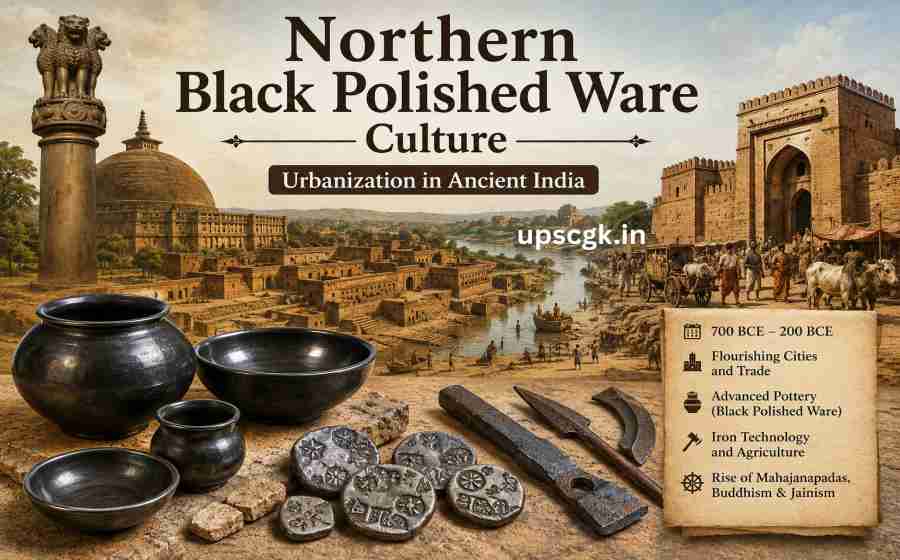
The Northern Black Polished Ware (NBPW) Culture represents one of the most significant phases in the history of ancient India. Dating from around 700 BCE to 200 BCE, this culture marked the beginning of the Second Urbanization in the Indian subcontinent after the decline of the Indus Valley Civilization. The period witnessed the emergence of prosperous cities, organized trade, powerful kingdoms, the use of iron technology, and the rise of new religious movements such as Buddhism and Jainism.
Named after its distinctive highly polished black pottery, the NBPW Culture flourished mainly in the Gangetic Plains, where fertile land and river networks encouraged agriculture, commerce, and urban development. This cultural phase laid the foundation for large empires like the Mauryan Empire and transformed ancient India’s social, political, and economic landscape.
Table of Contents
What is the Northern Black Polished Ware (NBPW) Culture?
The Northern Black Polished Ware Culture is an archaeological culture identified by its unique pottery made from fine clay with a glossy black or steel-grey surface. The pottery was produced using advanced firing techniques that gave it a mirror-like finish.
Unlike the earlier Painted Grey Ware Culture, which was mainly associated with rural settlements, the NBPW Culture reflects a highly urbanized society characterized by planned towns, flourishing trade, improved craftsmanship, and centralized political authority.
The period coincides with the rise of the Mahajanapadas, sixteen powerful states mentioned in ancient Buddhist and Jain literature.
Time Period and Geographical Distribution
The NBPW Culture flourished approximately between 700 BCE and 200 BCE, reaching its peak during the Mauryan period (4th–3rd century BCE).
Its distribution covered a vast area, including:
- The middle and upper Gangetic plains
- Eastern Uttar Pradesh
- Bihar
- Parts of Madhya Pradesh
- West Bengal
- Odisha
- Haryana
- Punjab
- Rajasthan
- Nepal Terai
Important archaeological sites include:
- Taxila
- Hastinapur
- Kaushambi
- Rajgir
- Vaishali
- Pataliputra
- Sravasti
- Champa
- Ujjain
- Mathura
The wide distribution indicates extensive trade networks and cultural interaction across northern India.
Characteristics of Northern Black Polished Ware
The pottery of this culture is considered among the finest ceramics produced in ancient India.
Its major features include:
- Mirror-like glossy black surface
- Thin and finely levigated clay
- High-temperature firing
- Luxurious appearance
- Bowls, dishes, cups, and small containers
- Often used by wealthy households and elites
Although black was the most common color, shades of steel grey, silver, and golden-black have also been discovered. The sophistication of the pottery reflects technological advancement and specialized craftsmanship.
Urbanization During the NBPW Period
The most remarkable feature of the NBPW Culture was the growth of urban centers. This phase is known as the Second Urbanization because large cities reappeared after nearly a thousand years following the decline of the Indus Valley Civilization.
Major characteristics of urbanization included:
Planned Settlements
Cities were built with:
- Fortification walls
- Defensive ramparts
- Brick houses
- Streets and lanes
- Drainage systems
- Storage facilities
Some cities also had administrative buildings and marketplaces.
Population Growth
Agricultural surplus supported a growing population.
Urban centers attracted:
- Merchants
- Artisans
- Priests
- Administrators
- Soldiers
This led to occupational specialization and social complexity.
Agricultural Development
Agriculture became highly productive during this period due to several factors.
These included:
- Extensive use of iron ploughshares
- Clearing of dense forests in the Gangetic plains
- Fertile alluvial soil
- Improved farming techniques
- Better irrigation facilities
Major crops included:
- Rice
- Wheat
- Barley
- Pulses
- Sugarcane
The surplus agricultural production became the economic foundation of urban growth.
Iron Technology and Economic Expansion
The NBPW period witnessed widespread use of iron tools.
Iron implements included:
- Axes
- Sickles
- Ploughshares
- Spears
- Knives
- Agricultural equipment
Iron technology helped increase agricultural productivity and supported construction, warfare, and industrial activities.
The growing economy encouraged the rise of specialized professions such as blacksmiths, potters, weavers, carpenters, and goldsmiths.
Trade and Commerce
Trade expanded rapidly during the NBPW period.
Both inland and long-distance trade flourished through:
- River routes
- Land highways
- Caravan trade
Major trade items included:
- Pottery
- Iron tools
- Cotton textiles
- Precious stones
- Beads
- Ivory
- Salt
- Metal ornaments
The introduction of punch-marked coins greatly facilitated commercial transactions. The rise of merchant communities and guilds further strengthened the urban economy.
Political Developments
The NBPW period coincided with the emergence of the Mahajanapadas.
Some prominent kingdoms included:
- Magadha
- Kosala
- Vatsa
- Avanti
These states developed:
- Organized taxation
- Permanent armies
- Administrative systems
- Capital cities
Among them, Magadha gradually became the most powerful kingdom due to its fertile land, iron resources, and strategic location.
Its success eventually led to the establishment of the Mauryan Empire, the first large-scale empire in Indian history.
Social Life
Society became increasingly diverse and organized.
Different occupational groups emerged, including:
- Farmers
- Merchants
- Artisans
- Priests
- Soldiers
- Administrators
The varna system became more structured, though urbanization also created opportunities for merchants and craftsmen to gain wealth and influence.
Guilds (Shrenis) became important economic institutions regulating production, trade, and professional standards.
Religious Developments
The NBPW period witnessed major religious transformations.
New faiths such as Buddhism and Jainism emerged as alternatives to elaborate Vedic rituals.
Several factors encouraged these religions:
- Growth of cities
- Rise of merchant classes
- Social mobility
- Dissatisfaction with ritualistic practices
Urban centers became important locations for monasteries, learning, and religious debates. These religions later spread across Asia through trade routes.
Archaeological Importance
Excavations have revealed numerous objects belonging to the NBPW Culture, including:
- Polished pottery
- Iron tools
- Punch-marked coins
- Terracotta figurines
- Beads
- Ornaments
- Brick structures
- Ring wells
- Drainage systems
These discoveries provide valuable evidence regarding urban planning, economic prosperity, and technological advancement during ancient India.
Significance of the NBPW Culture
The Northern Black Polished Ware Culture occupies a crucial place in Indian history because it marks the transition from village-based societies to organized urban civilizations.
Its major contributions include:
- Beginning of the Second Urbanization
- Expansion of iron technology
- Growth of cities and trade
- Development of powerful kingdoms
- Introduction of coin-based economy
- Rise of merchant guilds
- Spread of Buddhism and Jainism
- Foundation for the Mauryan Empire
The cultural and economic achievements of this period significantly influenced later Indian civilization.
Summary
The Northern Black Polished Ware (NBPW) Culture symbolizes one of the most transformative periods in ancient Indian history. It reflects remarkable advancements in technology, agriculture, trade, governance, and urban planning. The flourishing cities, expanding commerce, widespread use of iron, and emergence of new religious philosophies collectively shaped the socio-economic structure of early historic India.
As the archaeological hallmark of the Second Urbanization, the NBPW Culture bridged the gap between the Later Vedic age and the rise of the Mauryan Empire. Its legacy continues to provide valuable insights into the evolution of one of the world’s oldest civilizations, making it an indispensable topic for students of history and competitive examinations alike.
Also Check: History