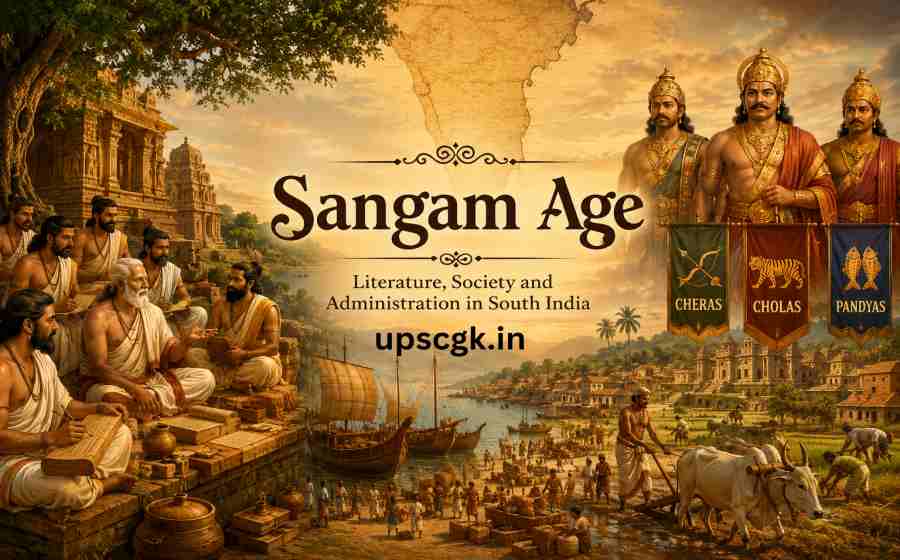
Learn about the Sangam Age – Literature, Society and Administration in South India, including Tamil culture, economy, kingship and famous Sangam works.
Sangam Age
The Sangam Age is considered one of the most glorious periods in the history of South India. It represents the early phase of Tamil civilization and culture. The term “Sangam” refers to assemblies of Tamil poets and scholars who composed a large body of literature in ancient Tamil Nadu. This age is famous for its rich literary traditions, advanced social structure, flourishing trade, and efficient administration.
Historians generally place the Sangam Age between the 3rd century BCE and the 3rd century CE. During this period, South India was ruled mainly by three powerful dynasties known as the “Muvendar” or the three crowned kings – the Cheras, Cholas, and Pandyas. These kingdoms played a major role in shaping the political and cultural life of South India.
Table of Contents
Origin of the Sangam Age
According to Tamil traditions, scholars and poets gathered in literary assemblies called Sangams under the patronage of kings. Though the exact historical details of these Sangams are debated, the literature produced during this period provides valuable information about ancient Tamil society.
The main sources of Sangam Age history include:
- Sangam literature
- Tamil epics
- Archaeological findings
- Foreign accounts by Greek and Roman writers
- Inscriptions and coins
The Sangam texts are considered among the oldest literary works in South India.
Sangam Literature
Sangam literature is one of the greatest achievements of ancient Tamil civilization. It mainly focused on human emotions, heroism, war, love, ethics, and social life.
Major Sangam Works
The literature is broadly divided into two categories:
1. Ettuthokai (Eight Anthologies)
These collections contain poems written by various poets on themes such as war, love, kingship, and daily life.
2. Pattupattu (Ten Idylls)
These are ten long poems praising kings, warriors, and merchants.
Other important literary works include:
- Tolkappiyam – the oldest Tamil grammar book
- Silappadikaram – a famous Tamil epic
- Manimekalai – a Buddhist epic
The literature provides detailed information about trade, agriculture, administration, religion, and cultural traditions.
Features of Sangam Literature
- Written mainly in Tamil language
- Secular in nature
- Described realistic human life
- Praised bravery and generosity of kings
- Mentioned trade relations with foreign countries
The poems were composed by both men and women poets. Famous poets included Kapilar, Avvaiyar, and Nakkirar.
Society During the Sangam Age
The Sangam society was well organized and culturally advanced. People lived in different ecological regions, and their occupations depended on geography.
Social Divisions
Society was broadly divided into different groups based on occupation rather than strict caste divisions. Important groups included:
- Kings and nobles
- Farmers
- Traders
- Shepherds
- Fishermen
- Artisans
- Warriors
Status of Women
Women enjoyed a respectable position in society. They participated in literature, education, and religious activities. Some women poets became highly respected in Sangam literature.
Marriage was an important institution, though love marriages were also common. Women were known for courage, loyalty, and wisdom.
Occupation and Economy
Agriculture was the backbone of the economy. Major crops included:
- Rice
- Sugarcane
- Cotton
- Pepper
Trade and commerce flourished greatly. South India maintained active trade relations with the Roman Empire, Southeast Asia, and Sri Lanka. Ports like Puhar and Muziris became important centers of overseas trade.
Roman gold coins discovered in South India show the existence of strong commercial connections.
Religion
People during the Sangam Age worshipped various gods and goddesses. Important deities included:
- Murugan
- Shiva
- Vishnu
- Korravai (war goddess)
Nature worship was also common. Jainism and Buddhism spread in South India during this period and influenced literature and ethics.
Administration in the Sangam Age
The Sangam kingdoms had an organized administrative system. The king was the supreme authority and was respected as the protector of the people.
The Three Major Kingdoms
Cheras
The Cheras ruled over present-day Kerala and western Tamil Nadu. Their capital was Vanji.
Cholas
The Cholas ruled the fertile Kaveri delta region. Their capital was Uraiyur and later Puhar became an important port city.
Pandyas
The Pandyas ruled southern Tamil Nadu with Madurai as their capital, which also became an important literary center.
Role of the King
The king was responsible for:
- Administration
- Justice
- Protection of the kingdom
- Encouragement of trade and agriculture
Kings were supported by ministers, military commanders, and officials. They often rewarded poets and scholars with gifts and land.
Revenue System
The main source of revenue was land tax. Other sources included:
- Trade taxes
- Customs duties
- Tribute from subordinate rulers
The collected revenue was used for warfare, irrigation, and public welfare.
Army and WarfareArmy and Warfare
The Sangam kingdoms maintained strong armies consisting of:
- Infantry
- Cavalry
- Elephants
- Chariots
Wars among the Cheras, Cholas, and Pandyas were common. Warriors who died in battle were honored through hero stones called “Nadukal.”
Trade and Urban Development
Trade played a vital role in the prosperity of the Sangam kingdoms. Important exports included:
- Spices
- Pearls
- Ivory
- Cotton textiles
Imported goods included:
- Gold
- Wine
- Glassware
Port cities became highly developed and attracted foreign merchants. Roads and markets contributed to economic growth.
Importance of the Sangam Age
The Sangam Age holds immense importance in Indian history because:
- It reflects the earliest Tamil culture and traditions
- It produced remarkable literary works
- It promoted trade and urbanization
- It encouraged art, music, and poetry
- It provides valuable historical information about South India
The Sangam period laid the foundation for later South Indian empires and cultural developments.
Summary
The Sangam Age was a golden period in the history of South India. It witnessed the growth of powerful kingdoms, flourishing trade, advanced administration, and extraordinary literary achievements. Sangam literature remains a priceless treasure that reflects the social, cultural, and political life of ancient Tamil society.
The contributions of the Cheras, Cholas, and Pandyas during this period helped shape South Indian civilization and left a lasting impact on Indian history. Even today, the Sangam Age is remembered for its rich heritage, vibrant culture, and literary excellence.
Also Check: History