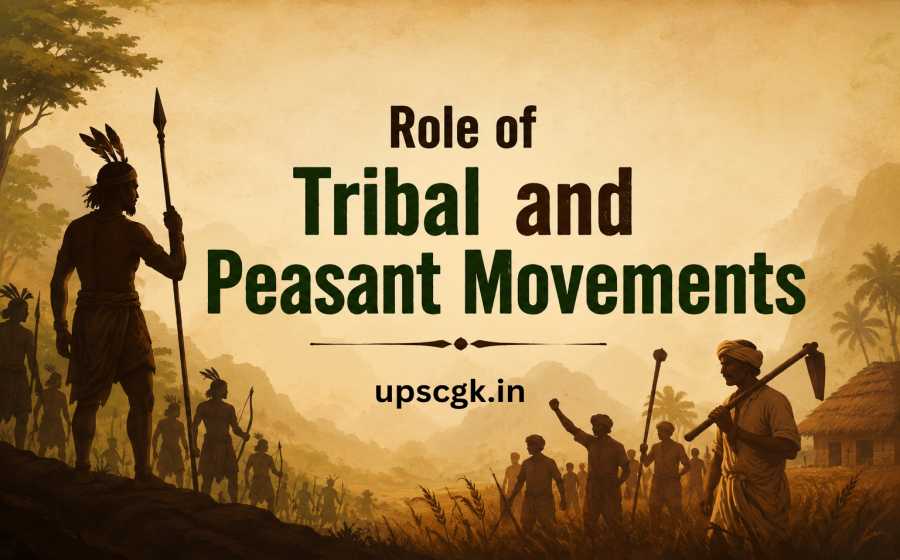
Explore the Role of Tribal and Peasant Movements in Indian History, their causes, major revolts, impact on society and contribution to India’s freedom struggle.
Role of Tribal and Peasant Movements
The history of India is not only the story of kings, rulers, and political leaders but also of ordinary people who fought against injustice and exploitation. Among these, tribal and peasant communities played a significant role in challenging oppressive systems and defending their rights. Tribal and peasant movements emerged in different parts of India during the colonial period and became important symbols of resistance against British policies, landlords, moneylenders, and social inequality.
These movements reflected the growing dissatisfaction of rural communities and highlighted the economic hardships faced by farmers and tribal populations. Though many of these revolts were local in nature, they contributed significantly to the broader struggle for justice and freedom in India.
Table of Contents
Understanding Tribal and Peasant Movements
Tribal movements were uprisings led by indigenous communities who sought to protect their traditional lands, forests, culture, and way of life. British policies often disrupted their economic and social systems by introducing new land laws, forest regulations, and taxation.
Peasant movements, on the other hand, were organized protests by farmers against excessive taxes, exploitative landlords, forced cultivation, and economic oppression. These movements aimed to secure better living conditions and protect agricultural interests.
Both tribal and peasant movements were reactions to colonial exploitation and became important chapters in India’s social and political history.
Causes of Tribal Movements
Several factors contributed to tribal uprisings during British rule:
1. Loss of Traditional Land Rights
The British introduced new land revenue systems that ignored traditional tribal ownership. Large areas of tribal land were taken over by landlords, contractors, and moneylenders.
2. Exploitative Forest Policies
Forest laws restricted tribal access to forests, which had been their primary source of livelihood for generations. Hunting, gathering forest produce, and shifting cultivation were often prohibited.
3. Economic Exploitation
Moneylenders and traders trapped tribal communities in cycles of debt. Many tribes lost their lands and became laborers under harsh conditions.
4. Cultural and Social Interference
The colonial administration often disregarded tribal customs and traditions, leading to resentment among tribal communities.
Major Tribal Movements in India
Santhal Rebellion (1855-56)
The Santhals of present-day Jharkhand and West Bengal launched a major revolt against moneylenders, landlords, and British officials. Led by Sidhu and Kanhu Murmu, the rebellion attracted thousands of participants and challenged colonial authority.
Munda Rebellion (1899-1900)
Led by the legendary tribal leader Birsa Munda, the Munda movement opposed land alienation and British rule. Birsa Munda inspired tribal communities to reclaim their rights and preserve their cultural identity.
Kol Uprising (1831-32)
The Kol tribes of Chotanagpur revolted against exploitative landlords and administrative interference. The movement demonstrated strong tribal resistance to colonial policies.
Bhil Revolts
The Bhils of western and central India organized several uprisings against British control and local exploitation throughout the nineteenth century.
Causes of Peasant Movements
Peasant movements emerged due to various economic and social challenges:
1. Heavy Land Revenue
Farmers were forced to pay high taxes regardless of crop conditions. Failure to pay often resulted in loss of land.
2. Exploitation by Zamindars
Many landlords charged excessive rents and imposed unfair conditions on tenant farmers.
3. Forced Cultivation
British commercial policies compelled peasants to cultivate cash crops such as indigo instead of food grains.
4. Rural Indebtedness
Dependence on moneylenders led to mounting debts and financial insecurity among peasants.
Major Peasant Movements in India
Indigo Revolt (1859-60)
Farmers in Bengal opposed the forced cultivation of indigo. European planters compelled peasants to grow indigo under unfair contracts. The revolt successfully drew public attention to their suffering.
Deccan Riots (1875)
Peasants in Maharashtra protested against moneylenders who exploited them through high-interest loans and unfair practices. The movement highlighted the severe debt burden faced by farmers.
Champaran Movement (1917)
Under the leadership of Mahatma Gandhi, farmers in Champaran, Bihar, resisted the oppressive indigo cultivation system. This movement marked Gandhi’s first major success in India and demonstrated the power of non-violent resistance.
Bardoli Satyagraha (1928)
Led by Sardar Vallabhbhai Patel, peasants in Gujarat opposed increased land revenue demands. The movement achieved success and strengthened confidence in collective action.
Tebhaga Movement (1946-47)
Sharecroppers in Bengal demanded a larger share of agricultural produce. The movement sought economic justice and improved rights for tenant farmers.
Impact of Tribal and Peasant Movements
Political Awareness
These movements increased political consciousness among rural populations. People became more aware of their rights and organized resistance against oppression.
Challenge to Colonial Rule
Repeated uprisings demonstrated that British authority was not unquestioned. Tribal and peasant resistance weakened colonial legitimacy.
Social Reforms
The movements forced authorities to reconsider certain exploitative policies. Some reforms were introduced to address grievances related to land and taxation.
Inspiration for National Movement
Many leaders of the Indian freedom struggle drew inspiration from these grassroots movements. They revealed the strength of mass participation in achieving social and political change.
Preservation of Identity
Tribal movements played a crucial role in protecting indigenous culture, traditions, and community rights against external interference.
Contribution to India’s Freedom Struggle
Although many tribal and peasant revolts were initially focused on local issues, they gradually became connected with the larger nationalist movement. Leaders such as Mahatma Gandhi recognized the importance of addressing rural concerns and mobilizing peasants for political action.
The participation of farmers and tribal communities broadened the social base of the freedom movement. Their sacrifices and struggles helped create a united front against colonial rule. These movements demonstrated that independence was not only the demand of educated elites but also the aspiration of ordinary people across villages and forests.
Summary
The tribal and peasant movements occupy a special place in Indian history. They represented the voices of marginalized communities fighting against exploitation, injustice, and colonial oppression. From the Santhal Rebellion and Munda Uprising to the Indigo Revolt and Bardoli Satyagraha, these movements showcased courage, resilience, and collective action.
Their contributions extended beyond immediate economic demands and played a significant role in shaping India’s journey toward independence. Understanding these movements helps us appreciate the struggles of ordinary people whose determination and sacrifices laid the foundation for a more just and democratic society.
Also Check: History