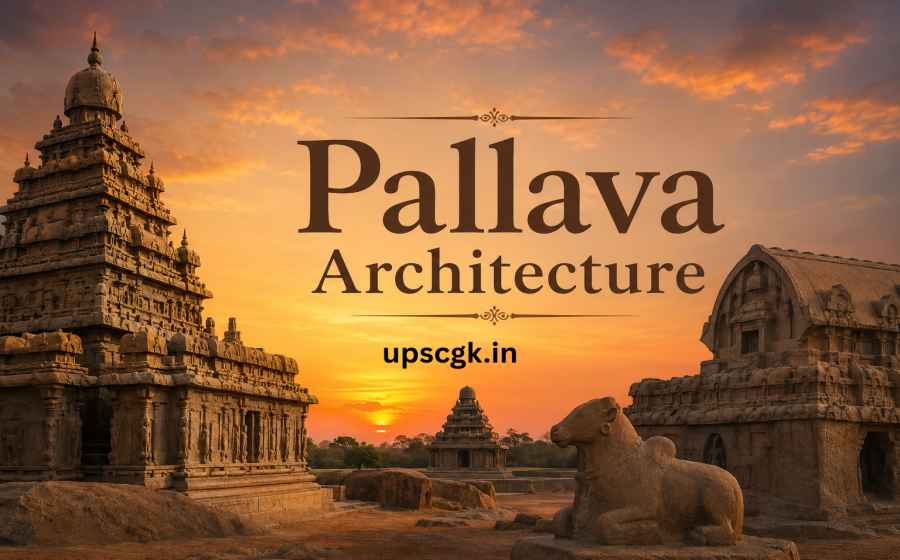
Explore Pallava Architecture, its rock-cut caves and structural temples, key features, famous monuments and its lasting influence on Indian temple architecture.
Pallava Architecture
Pallava Architecture represents one of the most significant phases in the evolution of Indian temple architecture. Flourishing between the 6th and 9th centuries CE, the Pallava dynasty ruled large parts of present-day Tamil Nadu with Kanchipuram as their capital. During their reign, temple architecture underwent a remarkable transformation, from simple rock-cut cave temples carved into hillsides to magnificent structural temples built with carefully dressed stone blocks.
The Pallavas laid the foundation for the Dravidian style of temple architecture, which later reached its peak under the Cholas, Pandyas, and Vijayanagara rulers. Their monuments reflect not only religious devotion but also exceptional engineering skills, artistic creativity, and technological advancement.
Table of Contents
Historical Background
The Pallava dynasty emerged as a major political power in South India around the 6th century CE. Kings such as Mahendravarman I, Narasimhavarman I (Mamalla), Paramesvaravarman I, and Narasimhavarman II (Rajasimha) were great patrons of art, architecture, literature, and religion.
Temple construction during the Pallava period can broadly be divided into two phases:
- Rock-cut architecture
- Structural (stone-built) architecture
This gradual shift marked an important milestone in the history of Indian architecture.
Rock Cut Architecture
The earliest Pallava temples were carved directly into natural rock formations. Instead of assembling stones, artisans excavated solid rock to create caves and shrines. This phase mainly flourished under Mahendravarman I (600–630 CE).
These cave temples were dedicated primarily to Shiva, though some were devoted to Vishnu.
Characteristics of Rock-Cut Temples
- Carved from a single rock face.
- Pillared halls known as mandapas.
- Sanctum (garbhagriha) cut into the rock.
- Minimal exterior decoration.
- Lion-based pillars in later examples.
- Sculptures depicting Hindu deities and mythological scenes.
Unlike earlier Buddhist cave architecture, Pallava cave temples were designed specifically for Hindu worship.
Mahendravarman Style
Mahendravarman I pioneered rock-cut temple architecture in South India.
His temples are known for:
- Plain yet elegant pillars.
- Square-shaped sanctums.
- Simple façades.
- Limited ornamentation.
- Strong influence of classical Indian art.
Many inscriptions found in these temples mention the king’s patronage and his interest in architecture.
Important Rock Cut Temples
Some notable examples include:
- Mandagapattu Cave Temple
- Mahendravadi Cave Temple
- Mamandur Cave Temples
- Dalavanur Cave Temple
- Kuranganilmuttam Cave Temple
The Mandagapattu inscription proudly declares that the temple was built without the use of bricks, timber, metal, or mortar, emphasizing the innovation of stone architecture.
Mamalla Style and Monolithic Rathas
The reign of Narasimhavarman I (Mamalla) witnessed further development in temple architecture. This period introduced monolithic temples, carved entirely from a single granite boulder.
These temples are popularly known as the Pancha Rathas at Mahabalipuram.
Features of Monolithic Rathas
- Entire temple carved from one rock.
- Different architectural styles in each ratha.
- Representation of various temple forms.
- Rich sculptural decoration.
- Animal sculptures including elephants and lions.
- Experimental designs for future structural temples.
Although called “rathas” (chariots), these monuments were never intended to be mobile. They served as architectural models.
The Pancha Rathas
The famous Pancha Rathas include:
- Dharmaraja Ratha
- Bhima Ratha
- Arjuna Ratha
- Nakula-Sahadeva Ratha
- Draupadi Ratha
Each ratha differs in size, design, roof style, and decorative elements, demonstrating the architects’ creativity.
Structural Temple Architecture
The greatest achievement of the Pallavas came with the transition from rock-cut monuments to fully constructed stone temples.
This phase reached its peak during the reign of Narasimhavarman II (Rajasimha) in the late 7th and early 8th centuries CE.
Instead of carving into rocks, builders assembled carefully cut stone blocks to construct permanent temples.
Characteristics of Structural Temples
Structural temples introduced several features that later became standard in South Indian temple architecture:
- Stone-built walls.
- Tower (Vimana) above the sanctum.
- Mandapas for worship.
- Circumambulatory path (Pradakshina Patha).
- Decorative sculptures covering exterior walls.
- Well-planned temple complexes.
- More elaborate entrances and gateways.
These temples displayed improved engineering techniques and artistic sophistication.
Shore Temple, Mahabalipuram
One of the finest examples of Pallava structural architecture is the Shore Temple, built by Narasimhavarman II around the early 8th century CE.
Features
- Located on the Bay of Bengal.
- Constructed entirely of granite.
- Dedicated mainly to Lord Shiva.
- Twin shrines with an additional Vishnu shrine.
- Multi-tiered pyramidal vimana.
- Nandi sculptures surrounding the temple.
- Beautiful sea-facing location.
The Shore Temple is one of the earliest surviving structural temples in South India and showcases the maturity of Pallava architecture.
Kailasanatha Temple, Kanchipuram
The Kailasanatha Temple is considered the masterpiece of Pallava architecture.
Built by Narasimhavarman II (Rajasimha), it represents the complete development of the Dravidian style.
Architectural Highlights
- Dedicated to Lord Shiva.
- Sandstone construction.
- Massive pyramidal vimana.
- Numerous subsidiary shrines.
- Rich carvings depicting various forms of Shiva.
- Intricate wall sculptures and decorative panels.
Its elegant proportions and detailed sculptures influenced later Chola temple architecture.
Vaikuntha Perumal Temple
Another significant Pallava monument is the Vaikuntha Perumal Temple at Kanchipuram.
Distinctive Features
- Dedicated to Lord Vishnu.
- Multi-storeyed sanctum.
- Sculptures narrating Pallava history.
- Beautiful pillared halls.
- Fine stone carvings.
- Advanced structural planning.
This temple provides valuable historical information through its inscriptions and relief sculptures.
Distinctive Features of Pallava Architecture
Pallava temples possess several unique characteristics that distinguish them from earlier Indian architecture:
- Gradual evolution from cave temples to structural temples.
- Beginning of the mature Dravidian architectural style.
- Pyramid-shaped vimanas.
- Lion-based pillars.
- Extensive use of granite.
- Rich sculptural decoration.
- Mythological narratives carved on walls.
- Balanced proportions and symmetry.
- Integration of religion, art, and engineering.
These innovations laid the foundation for later South Indian temple construction.
Influence on Later Dynasties
The Pallavas profoundly influenced subsequent South Indian kingdoms.
Their architectural traditions were adopted and expanded by:
- Cholas, who built grand temples like the Brihadisvara Temple.
- Pandyas, who developed elaborate temple complexes.
- Hoysalas, known for intricate stone carvings.
- Vijayanagara rulers, who introduced towering gopurams.
The Pallavas established many architectural principles that remained central to Dravidian temple construction for centuries.
Summary
Pallava Architecture marks a turning point in the history of Indian art and architecture. Beginning with simple yet innovative rock-cut cave temples and progressing to magnificent structural stone temples, the Pallavas transformed temple building into a highly sophisticated art form. Monuments such as the Pancha Rathas, Shore Temple, Kailasanatha Temple, and Vaikuntha Perumal Temple continue to showcase their architectural brilliance.
Their pioneering contributions shaped the future of South Indian temple architecture and left a cultural legacy that continues to inspire historians, architects, and devotees alike. Even today, Pallava temples stand as enduring symbols of India’s rich artistic heritage, reflecting the dynasty’s remarkable achievements in engineering, sculpture, and religious expression.
Also Check: History