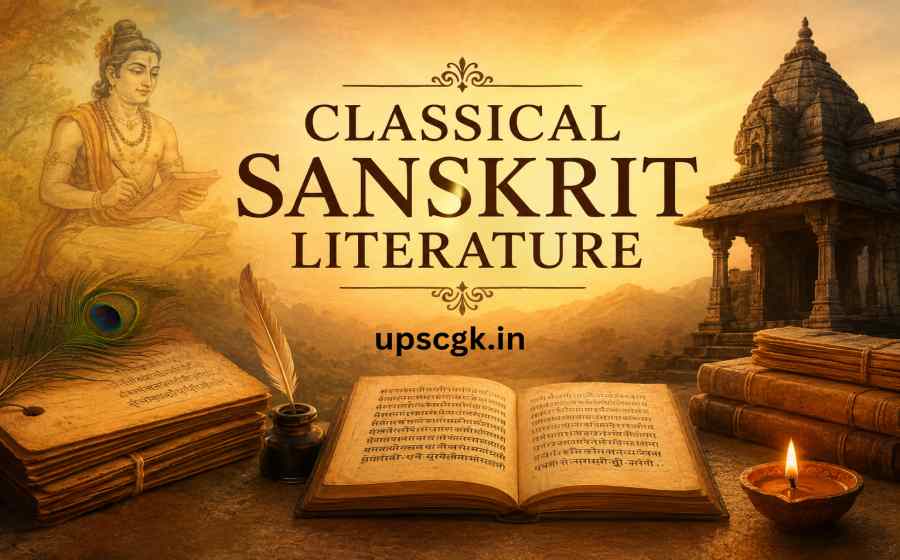
Discover Classical Sanskrit Literature, Kalidasa, and other renowned scholars. Explore their timeless works, literary styles and lasting cultural legacy.
Classical Sanskrit Literature
Classical Sanskrit Literature represents one of the greatest achievements of ancient Indian civilization. It flourished during the Gupta period (4th–6th century CE), often referred to as the Golden Age of India. During this era, Sanskrit evolved into the dominant language of literature, philosophy, science, and religion. Kings, scholars, poets, and dramatists contributed to an extraordinary literary tradition that continues to inspire readers worldwide.
Among the many literary giants of this period, Kalidasa occupies a special place as India’s greatest Sanskrit poet and playwright. Alongside him, scholars such as Bharavi, Vishakhadatta, Sudraka, Bhatti, and Dandin enriched Sanskrit literature with remarkable works that showcased creativity, intellectual depth, and artistic excellence. This flourishing literary culture not only strengthened India’s cultural identity but also influenced literature across Asia for centuries.
Table of Contents
Rise of Classical Sanskrit Literature
Although Sanskrit literature existed long before the Gupta Empire through the Vedas, Upanishads, and Epics, it reached its artistic peak during the Gupta age.
Several factors contributed to this literary renaissance:
- Royal patronage from Gupta rulers
- Political stability and economic prosperity
- Growth of universities and centers of learning
- Development of Hindu philosophy and temple culture
- Increased respect for scholars and poets
The Gupta emperors encouraged writers, philosophers, astronomers, and dramatists, allowing literature to flourish across the Indian subcontinent.
Kalidasa – The Greatest Sanskrit Poet
Kalidasa is widely regarded as the finest poet and dramatist in Classical Sanskrit literature. Although little is known about his personal life, historians believe he lived during the reign of Chandragupta II Vikramaditya.
His works combine beauty, imagination, nature, romance, philosophy, and devotion with unmatched poetic elegance.
Major Works of Kalidasa
1. Abhijnanashakuntalam (The Recognition of Shakuntala)
This is Kalidasa’s most celebrated play and one of the greatest works of world literature.
It narrates the love story of King Dushyanta and Shakuntala, exploring themes such as:
- Love
- Destiny
- Separation
- Forgiveness
- Reunion
The play gained international fame after being translated into several European languages and was admired by renowned scholars and writers across the world.
2. Meghadutam (The Cloud Messenger)
Meghadutam is a lyrical poem in which a Yaksha, separated from his wife, requests a passing cloud to carry a message of love.
The poem beautifully describes:
- Mountains
- Rivers
- Forests
- Cities
- Emotions of longing
Its vivid imagery makes it one of the finest examples of romantic poetry.
3. Kumarasambhavam
This epic poem describes the birth of Lord Kartikeya (Kumara), the son of Shiva and Parvati.
The work highlights:
- Divine love
- Penance
- Heroism
- Spiritual power
It is admired for its philosophical depth and poetic beauty.
4. Raghuvamsham
This epic narrates the history of the Raghu dynasty, to which Lord Rama belonged.
It celebrates:
- Ideal kingship
- Courage
- Justice
- Moral values
- Good governance
The poem remains an important source for understanding classical concepts of leadership.
Literary Style of Kalidasa
Kalidasa’s poetry is known for:
- Elegant Sanskrit language
- Rich metaphors and similes
- Detailed descriptions of nature
- Emotional depth
- Balanced use of imagination and realism
- Harmony between human emotions and the natural world
His comparison of lovers, seasons, rivers, and mountains continues to influence poets even today.
Other Great Scholars of Classical Sanskrit Literature
While Kalidasa remains the most celebrated figure, several other scholars made invaluable contributions to Sanskrit literature.
Bharavi
Bharavi composed the famous epic Kiratarjuniya, based on an episode from the Mahabharata.
The poem is admired for:
- Powerful language
- Complex grammar
- Philosophical ideas
- Heroic themes
It is considered one of the finest Sanskrit mahakavyas (epic poems).
Vishakhadatta
Vishakhadatta was a distinguished playwright best known for Mudrarakshasa.
The drama revolves around the political strategies used by Chanakya to establish Chandragupta Maurya’s empire.
Unlike romantic dramas, it focuses on:
- Diplomacy
- Statecraft
- Intelligence
- Political alliances
It provides valuable insight into ancient Indian political thought.
Sudraka
Sudraka authored Mrichchhakatika (The Little Clay Cart).
The play portrays ordinary urban life rather than royal courts and includes:
- Romance
- Social issues
- Crime
- Friendship
- Justice
Its realistic portrayal of society distinguishes it from many classical Sanskrit dramas.
Bhatti
Bhatti composed the Bhattikavya, which uniquely combines literature with grammar.
The poem teaches Sanskrit grammar while narrating episodes from the Ramayana, making it both an educational and literary masterpiece.
Dandin
Dandin was a renowned prose writer and literary critic.
His famous works include:
- Dashakumaracharita
- Kavyadarsha
Kavyadarsha became one of the earliest and most influential texts on Sanskrit literary criticism and poetics.
Features of Classical Sanskrit Literature
Classical Sanskrit literature possesses several distinctive characteristics:
Rich Use of Poetry
Poets used elaborate metaphors, similes, and symbolism to create vivid imagery and emotional appeal.
Harmony with Nature
Natural beauty played a central role in expressing human emotions. Mountains, rivers, flowers, birds, and changing seasons often reflected the feelings of characters.
Religious and Philosophical Themes
Many literary works explored:
- Dharma (duty)
- Karma
- Devotion
- Morality
- Spiritual wisdom
Court Patronage
Most poets received support from kings and royal courts, encouraging the production of sophisticated literary works.
High Linguistic Standards
The Sanskrit language reached exceptional levels of grammatical precision, elegance, and expressive power during this period.
Importance of Sanskrit Drama
Classical Sanskrit drama became one of India’s greatest cultural achievements.
Its notable features included:
- Combination of prose and poetry
- Music and dance
- Emotional expression (Rasa)
- Moral lessons
- Happy endings in most plays
Playwrights followed principles outlined in Bharata’s Natyashastra, ensuring artistic excellence and emotional balance.
Influence Beyond India
Classical Sanskrit literature influenced many civilizations across Asia.
Its impact spread to:
- Nepal
- Sri Lanka
- Tibet
- Cambodia
- Indonesia
- Thailand
- Java and Bali
Many stories from Sanskrit epics and dramas became part of local traditions, theatre, and temple art in these regions.
Legacy of Classical Sanskrit Literature
The literary works of Kalidasa and other Sanskrit scholars continue to be studied in universities across the world. Their writings have been translated into numerous languages and remain relevant because of their universal themes of love, duty, justice, courage, and human values.
Modern literature, theatre, dance, and cinema continue to draw inspiration from these timeless classics. The enduring popularity of Sanskrit literature demonstrates the intellectual and artistic brilliance of ancient India.
Summary
Classical Sanskrit literature marks the pinnacle of India’s literary heritage. Under the patronage of the Gupta rulers, scholars such as Kalidasa, Bharavi, Vishakhadatta, Sudraka, Bhatti, and Dandin produced masterpieces that combined artistic beauty with profound philosophical insight. Their works not only enriched Indian civilization but also influenced cultures far beyond its borders. Even today, Classical Sanskrit literature stands as a symbol of creativity, wisdom, and cultural excellence, preserving the rich intellectual traditions of ancient India for future generations.
Also Check: History