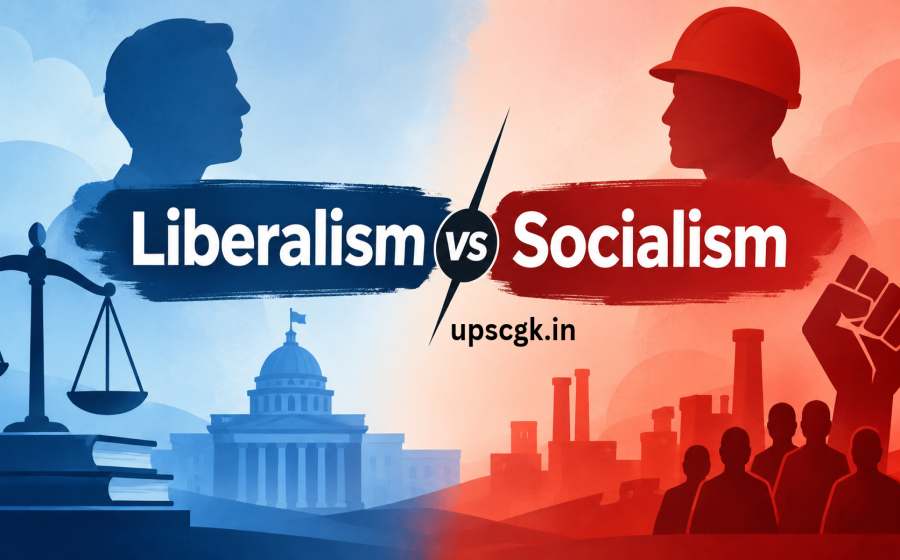
Explore liberalism vs socialism, their key principles, differences, similarities and views on freedom, equality, democracy and the economy.
Liberalism vs Socialism
Liberalism and socialism are two influential political ideologies that have shaped modern governments, economies, and societies. Both emerged in response to major social and political changes, particularly the rise of modern states, industrialisation, and debates over individual rights and economic justice. However, they differ significantly in their understanding of freedom, equality, private property, and the role of the state.
Liberalism generally emphasises individual liberty, constitutional government, and the protection of individual rights. Socialism places greater emphasis on social and economic equality, collective welfare, and public or social control over important economic resources. Although their approaches differ, both ideologies have influenced democratic movements, political parties, and public policies around the world.
Understanding liberalism and socialism helps explain contemporary debates about taxation, welfare programmes, private businesses, public services, and the responsibilities of governments.
Table of Contents
What is Liberalism?
Liberalism is a political ideology that places individual freedom, equal rights, and limited or constitutionally restricted government at the centre of political life. It developed in Europe over several centuries, particularly during the Enlightenment, when thinkers challenged absolute monarchy and defended reason, individual rights, and representative government.
Political philosophers such as John Locke, John Stuart Mill, and others contributed to the development of liberal thought. Their ideas helped shape modern constitutional democracies and the protection of civil liberties.
Key Principles of Liberalism
1. Individual liberty: Liberalism emphasises freedom of thought, expression, religion, association, and personal choice, subject to the rights of others and legitimate laws.
2. Equality before the law: Every individual should receive equal legal protection, regardless of social status, wealth, or background.
3. Constitutional government: Government power should be limited by constitutional rules, the rule of law, and institutional checks and balances.
4. Private property: Classical liberalism strongly supports the right to own private property and engage in voluntary economic activity.
5. Democracy and political rights: Modern liberalism generally supports representative government, free elections, political participation, and protection of minority rights.
Liberalism is not a single, uniform ideology. Classical liberalism tends to favour limited government and free markets, while social liberalism supports government intervention when necessary to reduce poverty, expand opportunities, and protect individual welfare.
What is Socialism?
Socialism is a political and economic ideology that seeks to reduce economic inequality and organise economic resources in ways that serve broader social needs. It questions whether private ownership of major productive resources should give a small section of society disproportionate economic power.
Socialist thought developed prominently during the nineteenth century, partly in response to the inequalities and difficult working conditions associated with industrial capitalism. Thinkers such as Robert Owen, Karl Marx, and Friedrich Engels influenced different socialist traditions, although they disagreed on methods and political objectives.
Key Principles of Socialism
1. Social and economic equality: Socialism seeks to reduce extreme differences in wealth, income, and access to essential resources.
2. Social ownership: Many socialist traditions advocate public, cooperative, or collective ownership of major productive assets, although the proposed forms of ownership vary.
3. Welfare and social security: Socialist approaches commonly support access to essential services, such as healthcare, education, housing, and social protection.
4. Workers’ rights: Socialism emphasises fair wages, safe working conditions, collective bargaining, and workers’ participation in economic decisions.
5. Economic planning or democratic control: Some socialist systems rely on central planning, while democratic socialist approaches may combine democratic institutions with public ownership, cooperatives, and regulated markets.
Socialism also includes several branches, including democratic socialism, Marxism, and market socialism. These approaches differ in their views on democracy, markets, private property, and the pace of social change.
Liberalism vs Socialism: Key Differences
Although both ideologies have influenced modern political systems, their priorities and approaches to organising society are different.
| Basis of Comparison | Liberalism | Socialism |
|---|---|---|
| Main objective | Protect individual liberty and rights | Promote social and economic equality |
| Individual and society | Emphasises individual freedom | Emphasises collective welfare alongside individual freedom |
| Property ownership | Generally supports private property | Favours social ownership of major productive resources in many forms |
| Economic system | Often supports market-based economies | Supports social or democratic control over economic resources; approaches to markets vary |
| Role of the state | Ranges from limited government to welfare-oriented intervention | Often supports public intervention to reduce inequality and advance social welfare |
| Economic inequality | May accept inequalities if considered compatible with justice and opportunity | Seeks to reduce unjust or excessive economic inequalities |
| Workers’ rights | Protects individual employment and contractual rights; approaches to unions vary | Traditionally places strong emphasis on workers’ collective rights |
| Freedom | Focuses strongly on individual and civil liberties | Also emphasises freedom from exploitation and material deprivation |
| Key thinkers | John Locke, John Stuart Mill, John Rawls | Karl Marx, Friedrich Engels, Robert Owen |
| Political approaches | Classical liberalism, social liberalism | Democratic socialism, Marxism, market socialism |
These distinctions are general rather than absolute. Liberalism includes traditions that support extensive welfare programmes, while socialism includes democratic and decentralised approaches that differ from centralised state planning.
Similarities Between Liberalism and Socialism
Despite their differences, liberalism and socialism share several important concerns.
1. Commitment to Human Welfare
Both ideologies are concerned with improving human life, although they disagree about the best methods. Liberalism protects individual rights and opportunities, while socialism places greater emphasis on reducing material deprivation and economic inequality.
2. Importance of Freedom
Freedom is important to both traditions. Liberalism focuses particularly on civil liberties, personal autonomy, and protection from arbitrary government interference. Many socialist traditions also argue that genuine freedom requires access to basic resources and protection from economic domination.
3. Support for Equality
Both ideologies recognise forms of equality, but their emphasis differs. Liberalism generally stresses equality before the law, equal rights, and fair opportunities. Socialism places greater emphasis on economic equality and reducing inequalities in wealth and power.
4. Influence on Modern Democratic Politics
Liberal and socialist ideas have shaped political parties, constitutional systems, labour movements, and public policies. In many democracies, political programmes combine liberal protections for individual rights with policies associated with socialist or social-democratic traditions.
5. Concern for Social Justice
Both ideologies offer ways to think about justice and the distribution of opportunities. Liberal approaches often emphasise rights, fair procedures, and equal opportunity, while socialist approaches commonly examine economic power, working conditions, and the distribution of resources.
Relationship Between Liberalism and Socialism
Liberalism and socialism are not always completely opposed. Their relationship depends on the particular thinkers, movements, and political systems being considered.
Social liberalism combines individual rights and democratic government with public policies intended to reduce poverty, expand education, and improve access to healthcare. It generally retains a market economy and private ownership.
Social democracy seeks to make market economies more equitable through labour protections, progressive taxation, public services, and social security. Contemporary social-democratic parties commonly operate within democratic political systems and mixed economies.
Democratic socialism seeks a more substantial transformation of economic ownership and decision-making while placing importance on democratic participation and political freedoms.
These traditions demonstrate that individual liberty and social equality can be pursued together, even when disagreements remain about property, taxation, markets, and the appropriate scope of government.
Summary
Liberalism and socialism are two major political ideologies that offer different approaches to freedom, equality, property, and economic organisation. Liberalism places individual liberty, civil rights, and constitutional government at its centre, while socialism focuses more strongly on social ownership, economic justice, and reducing inequalities in wealth and power.
Nevertheless, both traditions contain diverse viewpoints, and they share concerns about human welfare, freedom, and a just society. Their ideas have also influenced one another, producing political approaches that combine democratic rights with social protection.
Ultimately, the key difference lies in their emphasis: liberalism prioritises individual liberty, while socialism places greater emphasis on social and economic equality. Understanding both ideologies provides a clearer perspective on political debates about the role of government, the organisation of the economy, and the meaning of a fair society.
Also Check: Political Science