Discover the history of maritime trade in ancient India, its major ports, trade routes, exported goods and its impact on global commerce and cultural exchange.
Maritime Trade in Ancient India
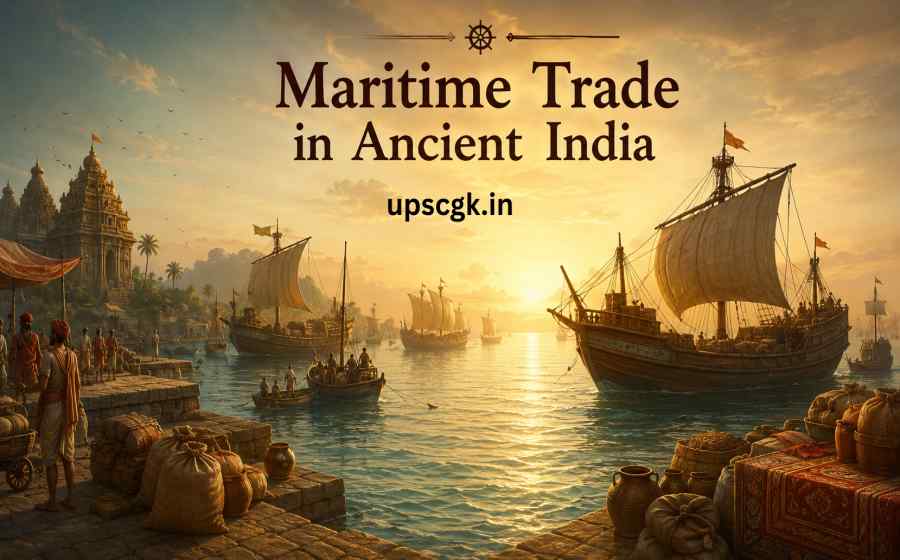
Maritime trade played a vital role in shaping the economic, cultural, and political landscape of ancient India. Blessed with a long coastline of over 7,500 kilometers and strategically located along the Indian Ocean, the Indian subcontinent became a major hub of international trade from as early as the Indus Valley Civilization. Indian merchants and sailors established extensive trade networks with regions such as Mesopotamia, Egypt, Rome, Southeast Asia, China, and East Africa. These maritime connections not only boosted India’s prosperity but also facilitated the exchange of ideas, religions, art, and technology across continents.
Ancient India’s maritime achievements demonstrate the advanced knowledge of navigation, shipbuilding, and commerce possessed by its people. The flourishing ports and bustling sea routes made India one of the wealthiest trading centers of the ancient world.
Table of Contents
Origins of Maritime Trade
The earliest evidence of maritime trade in India dates back to the Indus Valley Civilization (c. 2600–1900 BCE). Archaeological excavations at Lothal in present-day Gujarat have revealed one of the world’s earliest known dockyards. This remarkable structure indicates that the Harappans were actively engaged in overseas trade.
Artifacts such as seals, beads, pottery, and precious stones found in Mesopotamia suggest regular trade between the Indus Valley and the Sumerian civilization. Mesopotamian records refer to a region called “Meluhha,” which historians widely associate with the Indus Valley.
Growth During the Mauryan Period
Maritime commerce expanded significantly during the Mauryan Empire (321–185 BCE). The administration recognized the importance of overseas trade and maintained regulations for ports and customs. Ancient texts like the Arthashastra, written by Kautilya, mention officials responsible for supervising shipping activities, collecting customs duties, and regulating trade.
Major ports on both the eastern and western coasts facilitated trade with neighboring kingdoms and distant civilizations. Improved governance and political stability under the Mauryas encouraged merchants to venture into international markets.
Golden Age of Maritime Trade
The period between the 1st century BCE and the 3rd century CE witnessed the golden age of India’s maritime trade. During this era, Indian merchants maintained thriving commercial relations with the Roman Empire.
Roman demand for Indian luxury products was exceptionally high. Roman gold coins discovered across southern India provide strong archaeological evidence of this flourishing trade. Historical accounts suggest that large quantities of Roman gold flowed into India in exchange for spices, textiles, gemstones, and ivory.
The Greek text Periplus of the Erythraean Sea offers detailed descriptions of Indian ports, trade routes, and commercial practices, highlighting India’s importance in Indian Ocean trade.
Major Ancient Ports
Several ports emerged as major centers of international commerce.
Lothal
Located in Gujarat, Lothal served as one of the earliest trading ports of the Indus Valley Civilization. Its sophisticated dockyard demonstrates remarkable engineering skills.
Bharuch (Barygaza)
Situated on the western coast, Bharuch became one of India’s busiest ports during the Satavahana period. It connected India with the Roman Empire, Arabia, and East Africa.
Muziris
Located on the Malabar Coast in present-day Kerala, Muziris gained fame for its spice trade, particularly black pepper. Roman merchants frequently visited this prosperous port.
Arikamedu
Near present-day Puducherry, Arikamedu was an important center of Indo-Roman trade. Excavations have uncovered Roman pottery, amphorae, and coins.
Tamralipti
Located in Bengal, Tamralipti connected eastern India with Southeast Asia and China, becoming an important gateway for trade and Buddhist missionaries.
Major Trade Routes
Ancient Indian traders utilized seasonal monsoon winds to navigate across the Indian Ocean. Knowledge of these predictable wind patterns significantly reduced travel time and increased the safety of long-distance voyages.
The principal maritime routes connected India with:
- The Persian Gulf
- Mesopotamia
- Egypt
- The Roman Empire
- Arabian Peninsula
- East Africa
- Sri Lanka
- Southeast Asia
- China
Indian merchants often sailed from ports on the western coast to the Red Sea and Egypt, while eastern ports connected India with the kingdoms of Southeast Asia.
Major Exports
India exported a wide variety of valuable goods that were highly sought after across the ancient world.
Some important exports included:
- Black pepper and other spices
- Cotton textiles
- Silk fabrics
- Ivory
- Pearls
- Precious and semi-precious stones
- Sandalwood
- Indigo dye
- Sugar
- Steel products, including high-quality iron
Indian spices, especially pepper, were considered luxury commodities in Europe and the Mediterranean.
Major Imports
India also imported several valuable products from foreign lands.
These included:
- Gold and silver coins
- Horses
- Fine wines
- Glassware
- Coral
- Luxury ceramics
- Olive oil
- Metals
Many imported goods became symbols of prestige among India’s elite classes.
Shipbuilding and Navigation
Ancient Indians possessed remarkable expertise in shipbuilding. Literary works, inscriptions, and foreign accounts describe sturdy wooden ships capable of carrying heavy cargo over long distances.
Indian sailors relied on:
- Monsoon wind patterns
- Observation of stars
- Coastal landmarks
- Experience passed through generations
This advanced navigational knowledge allowed merchants to travel safely across the Indian Ocean centuries before the invention of modern navigation systems.
Cultural Impact of Maritime Trade
Maritime trade was not limited to the exchange of goods. It also promoted cultural interaction across Asia and beyond.
Indian merchants, monks, and scholars carried:
- Buddhism
- Hinduism
- Sanskrit language
- Indian art
- Architecture
- Literature
- Political ideas
Countries such as Indonesia, Cambodia, Thailand, Vietnam, and Malaysia experienced significant Indian cultural influence through peaceful maritime contacts. Magnificent monuments like Angkor Wat and Borobudur reflect this deep historical connection.
Economic Importance
Maritime commerce generated enormous wealth for ancient Indian kingdoms. Customs duties collected at ports became an important source of state revenue. Prosperous trading cities encouraged urbanization, supported artisans, and stimulated industries such as textiles, metallurgy, pottery, and shipbuilding.
Merchant guilds also became influential institutions, financing trade expeditions and contributing to temple construction and charitable activities.
Decline of Ancient Maritime Trade
Several factors contributed to the gradual decline of ancient India’s maritime dominance.
These included:
- Political instability following the fall of powerful empires
- Changes in international trade routes
- Repeated invasions
- Decline of Roman trade
- Rise of competing maritime powers
- Shifting commercial centers
Despite these challenges, maritime trade continued in various forms throughout the medieval period under different Indian kingdoms.
Summary
Maritime trade in ancient India was one of the foundations of the country’s prosperity and global influence. From the dockyards of Lothal to the bustling ports of Muziris and Bharuch, Indian merchants connected distant civilizations through vibrant networks of commerce. The exchange of spices, textiles, metals, and luxury goods enriched kingdoms, while the spread of religion, language, art, and knowledge fostered lasting cultural ties across Asia and beyond. Ancient India’s mastery of navigation and seafaring stands as a testament to its innovative spirit and significant contribution to world history. Even today, the legacy of these maritime traditions continues to inspire India’s role as a major maritime nation in the Indian Ocean region.
Also Check: History