Learn about Social and Religious Reform Movements in India, their leaders, objectives, impact on society and importance in modern Indian history.
Social and Religious Reform Movements in India
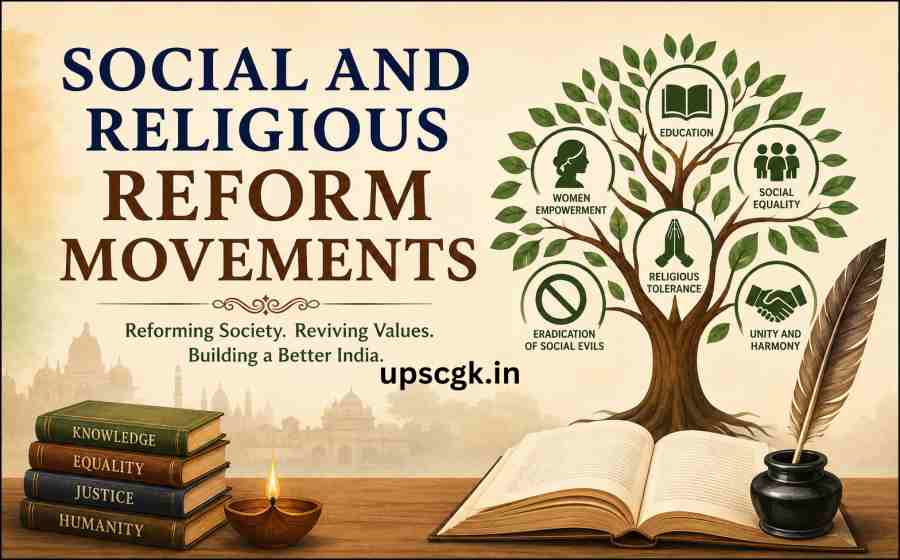
The nineteenth century witnessed the rise of several social and religious reform movements in India. These movements emerged as a response to social evils, religious superstitions, caste discrimination, gender inequality, and the challenges posed by British rule. Reformers sought to modernize Indian society while preserving its cultural and spiritual heritage.
The reform movements played a crucial role in awakening social consciousness, promoting education, improving the status of women, and encouraging rational thinking. They also contributed significantly to the growth of Indian nationalism by creating a sense of unity and pride among Indians.
Table of Contents
Background of the Reform Movements
Before the nineteenth century, Indian society was burdened with various social problems such as:
- Sati system
- Child marriage
- Female infanticide
- Untouchability
- Caste discrimination
- Lack of women’s education
- Religious orthodoxy and superstitions
The arrival of Western education, Christian missionaries, modern communication systems, and the spread of scientific thinking encouraged many Indian intellectuals to challenge these social practices. As a result, numerous reform movements emerged across different parts of the country.
Brahmo Samaj
The Brahmo Samaj was founded in 1828 by Raja Ram Mohan Roy in Calcutta.
Objectives
- Promote monotheism (belief in one God)
- Oppose idol worship
- Eliminate social evils
- Encourage women’s rights and education
- Spread rational thinking
Contributions
- Led the campaign against the Sati system
- Supported widow remarriage
- Opposed child marriage
- Promoted modern education
Because of his efforts, Raja Ram Mohan Roy is often called the “Father of Modern India.”
Arya Samaj
The Arya Samaj was founded in 1875 by Swami Dayanand Saraswati.
Main Principles
- Return to the teachings of the Vedas
- Reject idol worship
- Promote social equality
- Encourage education for all
- Fight against caste discrimination
Contributions
- Established educational institutions through the DAV movement
- Promoted women’s education
- Encouraged social reforms
- Launched the Shuddhi Movement for reconversion
The slogan of Arya Samaj was “Back to the Vedas.”
Prarthana Samaj
The Prarthana Samaj was established in Bombay in 1867 by Atmaram Pandurang.
Objectives
- Reform Hindu society
- Promote widow remarriage
- Encourage female education
- Oppose caste restrictions
Contributions
The movement played a significant role in social reforms in western India and inspired progressive thinking among educated Indians.
Ramakrishna Mission
The Ramakrishna Mission was founded in 1897 by Swami Vivekananda in memory of his spiritual guru Ramakrishna Paramahamsa.
Objectives
- Serve humanity
- Promote spiritual development
- Spread the message of universal brotherhood
Contributions
- Established schools, colleges, hospitals, and relief centers
- Promoted religious harmony
- Encouraged nationalism and self-confidence
Swami Vivekananda’s speech at the Parliament of the World’s Religions brought international recognition to Indian spirituality.
Aligarh Movement
The Aligarh Movement was started by Sir Syed Ahmad Khan.
Objectives
- Promote modern education among Muslims
- Encourage scientific learning
- Bridge the gap between traditional and modern knowledge
Contributions
- Established the Mohammedan Anglo-Oriental College
- Laid the foundation for Aligarh Muslim University
- Encouraged social and educational advancement among Muslims
Theosophical Society
The Theosophical Society was founded by Helena Petrovna Blavatsky and Henry Steel Olcott.
Later, it gained popularity in India under Annie Besant.
Objectives
- Promote universal brotherhood
- Encourage study of religion, philosophy, and science
- Revive interest in ancient Indian culture
Contributions
- Promoted education
- Supported the Indian freedom movement
- Established educational institutions
Young Bengal Movement
The Young Bengal Movement was led by Henry Louis Vivian Derozio.
Features
- Encouraged rational thinking
- Challenged social customs
- Supported freedom of expression
- Promoted modern education
Although limited in reach, it inspired intellectual reform and critical thinking among the youth.
Reform Movements for Women’s Rights
Several reformers worked to improve the condition of women.
Major Reformers
- Ishwar Chandra Vidyasagar supported widow remarriage.
- Jyotirao Phule worked for women’s education and lower-caste rights.
- Savitribai Phule opened schools for girls.
- Pandita Ramabai advocated women’s empowerment.
Achievements
- Promotion of female education
- Support for widow remarriage
- Opposition to child marriage
- Improvement in women’s social status
Impact of Social and Religious Reform Movements
The reform movements brought significant changes to Indian society:
Social Impact
- Reduced social evils
- Improved status of women
- Encouraged education
- Challenged caste discrimination
Religious Impact
- Promoted tolerance and harmony
- Encouraged rational interpretation of religion
- Reduced superstition and orthodoxy
Political Impact
- Strengthened national consciousness
- Inspired future freedom fighters
- Created awareness about rights and equality
Educational Impact
- Establishment of schools and colleges
- Spread of modern education
- Promotion of scientific thinking
Importance for UPSC and Competitive Exams
Social and Religious Reform Movements are an important topic in Modern Indian History. Questions are frequently asked about:
- Founders and organizations
- Objectives of reform movements
- Contributions of reformers
- Women’s reform movements
- Impact on Indian nationalism
A clear understanding of these movements helps aspirants connect social reforms with the broader Indian freedom struggle.
Summary
The Social and Religious Reform Movements of the nineteenth century marked a turning point in Indian history. Reformers challenged outdated customs, promoted education, improved the status of women, and encouraged rational thinking. Their efforts laid the foundation for a modern, progressive, and united India. These movements not only transformed society but also contributed significantly to the rise of Indian nationalism and the eventual struggle for independence.
Also Check: History