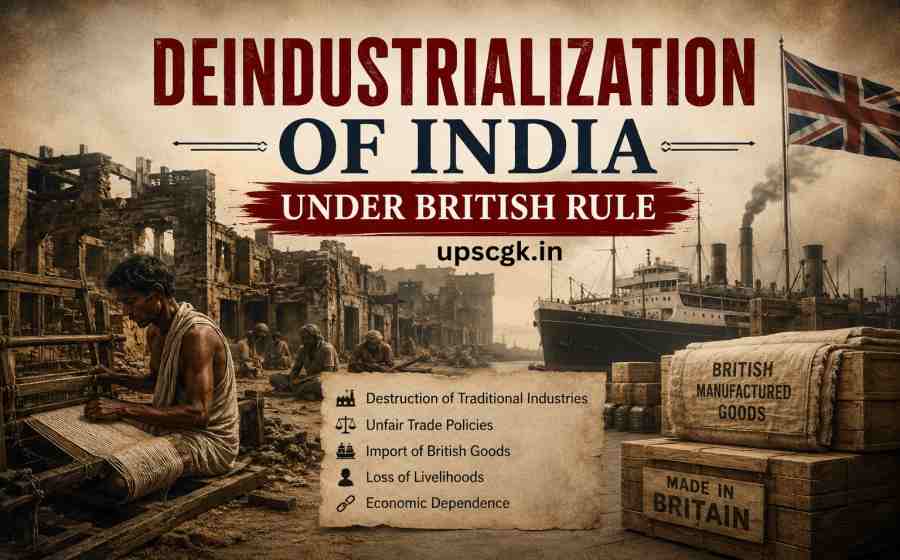
Deindustrialization of India under British Rule led to the decline of traditional industries, unemployment, poverty and economic dependence on Britain.
Deindustrialization of India under British Rule
The period of British rule in India witnessed a significant transformation of the Indian economy. One of the most important and damaging consequences of colonial rule was the deindustrialization of India. Before the arrival of British dominance, India was known across the world for its flourishing handicrafts, textiles, metalwork, shipbuilding, and various cottage industries. Indian products were highly valued in international markets due to their quality and craftsmanship. However, British economic policies gradually destroyed these traditional industries, leading to widespread unemployment, poverty, and economic dependency.
Deindustrialization refers to the decline of manufacturing and industrial activities in a country. In the Indian context, it describes the systematic destruction of indigenous industries under British colonial rule and the conversion of India into a supplier of raw materials and a market for British manufactured goods.
Table of Contents
India’s Industrial Prosperity Before British Rule
Before British control, India was one of the world’s leading manufacturing economies. Indian artisans produced fine cotton and silk textiles, carpets, metal products, jewelry, and handicrafts. Cities such as Dhaka, Murshidabad, Surat, Masulipatnam, and Ahmedabad were renowned centers of textile production.
Indian cotton textiles, especially muslin and calico, were in high demand in Europe, Africa, and Asia. Skilled artisans and craftsmen enjoyed respectable social and economic status. The thriving industries contributed significantly to India’s wealth and global trade.
Causes of Deindustrialization
1. Discriminatory Trade Policies
British authorities adopted policies that favored British manufacturers at the expense of Indian producers. Indian goods exported to Britain faced heavy import duties, making them expensive and less competitive. In contrast, British manufactured goods entered India with minimal or no duties.
This unequal trade system allowed British products to dominate Indian markets while Indian industries struggled to survive.
2. Industrial Revolution in Britain
The Industrial Revolution transformed Britain’s manufacturing sector through mechanized production. Machines enabled British factories to produce goods faster and at lower costs than Indian artisans.
As a result, cheap machine-made textiles flooded Indian markets. Traditional Indian craftsmen, who depended on manual labor, could not compete with the mass-produced British products.
3. Destruction of the Textile Industry
The textile industry suffered the most severe damage. British policies encouraged the export of raw cotton from India while importing finished cloth from British mills.
The famous handloom and weaving industries gradually declined. Many weavers lost their livelihoods and were forced to abandon their traditional occupations. The once-flourishing textile centers experienced economic decline and social distress.
4. Exploitation of Raw Materials
British economic interests focused on extracting raw materials from India for use in British industries. Cotton, jute, indigo, tea, and other resources were exported in large quantities.
Instead of promoting industrial development within India, colonial policies ensured that raw materials were processed in Britain. This prevented the growth of indigenous manufacturing and industrialization.
5. Decline of Royal Patronage
Before colonial rule, Indian artisans received support from local rulers, kingdoms, and wealthy patrons. The expansion of British power weakened traditional political institutions and reduced patronage for craftsmen.
Without financial support and market demand, many artisans found it difficult to sustain their occupations.
6. Development of Railways
Although railways improved transportation, they primarily served British economic interests. Rail networks facilitated the movement of raw materials from villages to ports and enabled British manufactured goods to reach even remote parts of India.
This increased competition for local producers and accelerated the decline of traditional industries.
Effects of Deindustrialization
Massive Unemployment
The collapse of traditional industries left millions of artisans, weavers, and craftsmen without work. Families that had depended on manufacturing for generations faced severe economic hardship.
Ruralization of the Economy
Many unemployed artisans migrated to villages and turned to agriculture for survival. This increased pressure on agricultural land and contributed to rural poverty.
Rise in Poverty
The destruction of indigenous industries reduced employment opportunities and incomes. Large sections of the population experienced declining living standards and economic insecurity.
Dependence on Agriculture
As industrial activities declined, India became increasingly dependent on agriculture. This dependence made the economy vulnerable to droughts, famines, and fluctuations in agricultural output.
Colonial Economic Dependency
India was transformed into a supplier of raw materials and a consumer of British manufactured goods. This economic structure primarily benefited Britain while hindering India’s industrial growth.
Nationalist Criticism
Indian nationalist leaders strongly criticized colonial economic policies. Economists and leaders argued that British rule systematically drained India’s wealth and destroyed its productive capacity.
Prominent thinkers highlighted how colonial exploitation weakened India’s economy and prevented industrial development. Their criticism became an important part of the Indian freedom movement and increased awareness about economic nationalism.
Summary
The deindustrialization of India under British rule was one of the most significant economic consequences of colonialism. Through discriminatory trade policies, exploitation of raw materials, and the promotion of British manufactured goods, colonial authorities undermined India’s traditional industries. The resulting unemployment, poverty, and economic dependency had long-lasting effects on Indian society.
Understanding deindustrialization is essential for analyzing the economic history of colonial India and appreciating the challenges faced during the country’s journey toward independence and industrial development. The experience serves as a reminder of how economic policies can profoundly influence the prosperity and progress of a nation.
Also Check: History