Explore the trade and economy in Sangam Age, including agriculture, industries, inland and overseas trade, Roman connections, ports and economic prosperity.
Trade and Economy in Sangam Age
The Sangam Age represents one of the most prosperous and culturally rich periods in the history of ancient South India. It roughly lasted from the 3rd century BCE to the 3rd century CE and was dominated by the three major Tamil kingdoms – the Cheras, Cholas, and Pandyas. The economy during this period was highly developed and depended on agriculture, trade, crafts, and maritime commerce. Sangam literature provides valuable information about the economic life, occupations, markets, and trade relations of the Tamil people.
Trade and commerce played a major role in shaping the prosperity of the Sangam kingdoms. The region maintained active internal as well as overseas trade connections with countries like Rome, Egypt, Greece, and Southeast Asia. Due to flourishing trade, urban centers developed rapidly, and ports became centers of wealth and cultural exchange.
Table of Contents
Agricultural Economy
Agriculture was the backbone of the Sangam economy. Most people were engaged in farming and related activities. The fertile river valleys and monsoon climate supported cultivation across different regions of Tamilakam.
The chief crops cultivated during the Sangam Age included:
- Rice
- Sugarcane
- Millets
- Cotton
- Pepper
- Turmeric
- Ginger
Rice was the staple food and was mainly grown in fertile plains known as “Marudam” lands. Irrigation facilities such as tanks, wells, and canals were developed to improve agricultural production. Farmers used traditional tools and oxen for ploughing fields.
The rulers encouraged agriculture because it was the main source of state revenue. Land tax formed an important part of the kingdom’s income. Prosperous agriculture also supported trade and urban growth.
Classification of Land and Economic Activities
Sangam literature divided the land into five geographical regions called “Tinai.” Each region had different occupations and economic activities.
Kurinji (Mountain Region)
People engaged in hunting, gathering forest products, and shifting cultivation. Honey, sandalwood, and spices were important products.
Mullai (Forest and Pastoral Region)
Cattle rearing and dairy farming were common occupations. Milk, butter, and ghee were traded in nearby markets.
Marudam (Fertile Agricultural Land)
This was the most productive agricultural zone where rice cultivation flourished.
Neital (Coastal Region)
Fishing, salt production, pearl diving, and maritime trade were the major occupations.
Palai (Dry Region)
People practiced caravan trade and sometimes engaged in warfare and cattle raids.
This classification shows the diversity and specialization of the Sangam economy.
Trade and Commerce
Trade was highly developed during the Sangam period. Both inland and overseas trade contributed greatly to economic prosperity.
Inland Trade
Internal trade connected villages, towns, and cities through roads and caravan routes. Merchants transported goods using carts, pack animals, and boats.
Markets were organized in urban centers where traders sold agricultural products, textiles, spices, metals, and handicrafts. Barter was common, but coins were also used for transactions.
Important inland trade items included:
- Rice and grains
- Cotton textiles
- Salt
- Spices
- Metal products
- Jewelry
Merchants formed trade groups and guilds for protection and better organization of commerce.
Overseas Trade
The Sangam kingdoms maintained extensive maritime trade relations with foreign countries. Overseas trade reached its peak because of strategic coastal ports and favorable monsoon winds.
Trade with Rome
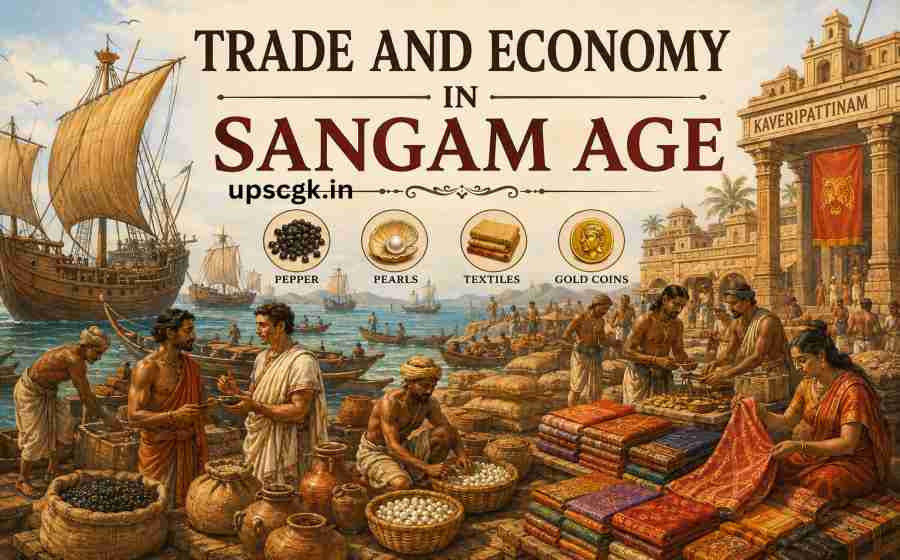
Trade between South India and the Roman Empire was highly profitable. Roman merchants visited Tamil ports to purchase luxury goods. Roman gold coins discovered in Tamil Nadu prove strong commercial relations.
Exports from Tamilakam included:
- Pepper
- Pearls
- Ivory
- Fine textiles
- Precious stones
- Spices
Imports included:
- Gold coins
- Wine
- Glassware
- Horses
- Luxury goods
Pepper was especially popular in Rome and was often called “Black Gold.”
Major Ports of the Sangam Age
Several ports became centers of international trade and cultural exchange.
Kaveripattinam (Puhar)
It was the chief Chola port and an important trading center. Ships from foreign countries visited this port regularly.
Muziris
Located in the Chera kingdom, Muziris was famous for Roman trade and spice exports.
Korkai
This Pandyan port was renowned for pearl fishing and maritime commerce.
These ports connected South India with the Mediterranean world and Southeast Asia.
Industries and Crafts
Various industries flourished during the Sangam Age. Skilled artisans produced high-quality goods for local and foreign markets.
Textile Industry
Cotton weaving was a major industry. Tamil textiles were known for their fine quality and were exported overseas.
Pearl Fishing
Pearl diving was an important occupation in coastal areas, especially around Korkai. Pearls from South India were famous worldwide.
Metalwork
Blacksmiths and metalworkers produced weapons, tools, ornaments, and household items.
Pottery and Handicrafts
Artisans created beautiful pottery, beads, ivory products, and jewelry. The growth of industries increased employment opportunities and strengthened the economy.
Role of Merchants
Merchants occupied an important place in Sangam society. Wealthy traders enjoyed social prestige and contributed to economic development. Merchant groups organized caravans and shipping activities.
Foreign traders, especially Romans and Greeks, frequently visited Tamil ports. The interaction between Indian and foreign merchants encouraged cultural exchange along with economic growth.
Currency and Taxation
Coins were widely used during the Sangam period. Roman gold coins circulated in trade centers, while local rulers also issued coins.
The government collected taxes from:
- Agriculture
- Trade
- Ports
- Markets
Custom duties were imposed on imported and exported goods. The revenue collected helped rulers maintain administration, army, and public works.
Urbanization and Economic Prosperity
Trade and commerce led to the growth of towns and cities. Urban centers became hubs of business, administration, and culture. Prosperous cities had markets, warehouses, docks, and residential areas.
The Sangam economy reflected prosperity, social mobility and commercial advancement. Wealth generated through trade supported literature, art, and temple activities.
Summary
The trade and economy of the Sangam Age reveal the remarkable economic strength of ancient South India. Agriculture formed the foundation of society, while inland and overseas trade brought immense prosperity. Maritime commerce with Rome and other foreign regions transformed Tamilakam into an important center of international trade.
The flourishing ports, thriving industries, skilled artisans, and organized merchant groups demonstrate the advanced economic system of the Sangam period. The economic prosperity of this era also contributed significantly to the cultural and literary achievements of South India. The Sangam Age remains an important chapter in Indian history because of its vibrant trade networks and prosperous economy.
Also Check: History