Discover how 2000 Year Old Indian Gold Rings Discovered in Thailand reveal ancient trade, Brahmi script and cultural ties between India and Southeast Asia.
2000 Year Old Indian Gold Rings Discovered in Thailand
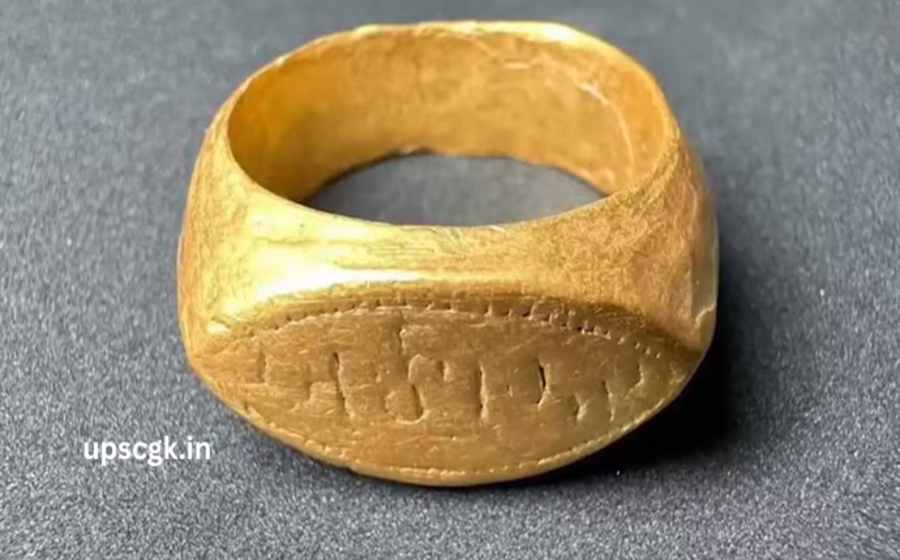
A remarkable archaeological discovery in Thailand has shed new light on the deep historical and cultural connections between India and Southeast Asia. Thailand’s Fine Arts Department recently announced the discovery of two Indian gold rings, estimated to be around 2,000 years old, during excavations at the Don Yai Thong archaeological site in Phetchaburi province. One of the rings bears an inscription in the ancient Brahmi script, while the other is plain.
The discovery provides valuable evidence of early maritime trade, cultural exchange, and the spread of Indian influence across Southeast Asia during the Iron Age. Archaeologists believe these artefacts will contribute significantly to understanding ancient trade routes and the movement of ideas, languages, and religious traditions.
Table of Contents
Discovery at Don Yai Thong Archaeological Site
The Don Yai Thong archaeological site is situated approximately 130 kilometres southwest of Bangkok in Thailand’s Phetchaburi province. The site came to the attention of archaeologists in 2026 after local villagers unearthed fragments of ancient bronze drums while cultivating rice fields.
Following the discovery, systematic excavations began, revealing several important artefacts and human skeletal remains. Among the most significant finds were two finely crafted gold rings believed to have originated from the Indian subcontinent.
The archaeological evidence indicates that the site served as an important settlement or burial ground during the Iron Age, making it an important location for studying early civilizations in mainland Southeast Asia.
The Significance of the Brahmi-Inscribed Ring
One of the gold rings carries an inscription written in the ancient Brahmi script. Experts have deciphered the inscription as “pusarakhitasa,” meaning “the one protected by Pushya.”
The inscription is considered highly significant because it reflects the presence of Indian linguistic and cultural traditions in Southeast Asia nearly two millennia ago.
Pushya is one of the most auspicious nakshatras (lunar constellations) in Indian astronomy and has long been associated with prosperity, wisdom, and divine protection. The inscription suggests that astrological beliefs and naming traditions from ancient India had already spread beyond the Indian subcontinent through trade and cultural interactions.
About the Brahmi Script
Brahmi is among the oldest known writing systems of the Indian subcontinent. It became widely used during the Mauryan Empire, particularly under Emperor Ashoka, whose rock and pillar edicts were engraved in Brahmi script.
Many modern Indian scripts, including Devanagari, Bengali, Tamil, Kannada, Telugu, and several Southeast Asian writing systems, trace their origins to Brahmi.
The discovery of a Brahmi-inscribed ornament in Thailand strengthens archaeological evidence that Indian merchants, scholars, and religious communities maintained close contact with Southeast Asian societies centuries before the Common Era.
Evidence of Early India–Southeast Asia Maritime Trade
The discovery supports the long-established theory that India maintained extensive maritime trade networks with Southeast Asia during the Iron Age.
Ancient Indian traders travelled across the Bay of Bengal carrying spices, textiles, beads, precious metals, religious ideas, languages, and artistic traditions. In return, they imported valuable forest products, aromatic woods, gemstones, and other commodities from Southeast Asia.
The presence of Indian-made ornaments and inscriptions at Don Yai Thong demonstrates that these interactions extended beyond commerce and also involved cultural and social exchanges.
Earlier discoveries of Brahmi-inscribed artefacts in Thailand’s Krabi and Chumphon provinces further reinforce this historical connection.
Archaeological Importance of the Burial Site
The two gold rings were discovered alongside human skeletal remains, indicating that they may have been part of burial rituals during the Iron Age.
Burial sites from this period often contain valuable ornaments, bronze objects, pottery, iron tools, and imported luxury goods. Such discoveries provide archaeologists with important information about the social status, beliefs, trade relationships, and cultural practices of ancient communities.
Researchers hope that continued excavation at Don Yai Thong will reveal more artefacts capable of explaining how ancient societies in Southeast Asia interacted with neighbouring civilizations.
Preservation and Ongoing Research
Following their discovery, the gold rings have been transferred to the Phra Nakhon Khiri Museum in Ratchaburi province for scientific preservation and detailed examination.
Experts are conducting metallurgical analysis, inscription studies, and archaeological assessments to determine the exact origin, craftsmanship, and age of the artefacts.
Excavation teams are also working quickly because seasonal groundwater and heavy rainfall pose a serious threat to both fragile artefacts and human skeletal remains buried beneath the site. Their efforts aim to preserve valuable historical evidence before environmental factors can cause irreversible damage.
Why This Discovery Matters
The discovery is significant for several reasons:
- Demonstrates ancient maritime trade between India and Southeast Asia.
- Provides fresh evidence of the spread of Brahmi script beyond the Indian subcontinent.
- Highlights the cultural influence of Indian astronomy and traditions in early Southeast Asian societies.
- Confirms that archaeological exchanges between India and Thailand date back nearly 2,000 years.
- Offers new insights into Iron Age burial practices and regional trade networks.
The findings also strengthen the understanding that ancient globalization was driven not only by trade but also by the exchange of languages, beliefs, technology, and artistic traditions.
Key Facts
- Location: Don Yai Thong archaeological site, Phetchaburi Province, western Thailand.
- Age of Rings: Approximately 2,000 years old.
- Special Feature: One gold ring bears a Brahmi inscription reading “pusarakhitasa” (“the one protected by Pushya”).
- Historical Period: Iron Age of mainland Southeast Asia.
- Significance: Evidence of early India–Southeast Asia maritime trade and cultural exchange.
- Current Preservation: Phra Nakhon Khiri Museum, Ratchaburi Province, Thailand.
Summary
The discovery of two 2,000-year-old Indian gold rings at Thailand’s Don Yai Thong archaeological site marks an important milestone in the study of ancient Asian history. The Brahmi-inscribed ring, in particular, provides compelling evidence of early Indian cultural influence and thriving maritime connections with Southeast Asia.
As archaeologists continue their excavations and scientific analysis, the site is expected to reveal even more information about the complex networks that linked ancient civilizations across the Bay of Bengal. These discoveries remind us that India and Southeast Asia shared vibrant economic, cultural, and intellectual relationships long before the modern era, shaping the historical development of both regions.
Also Check: Current Affairs