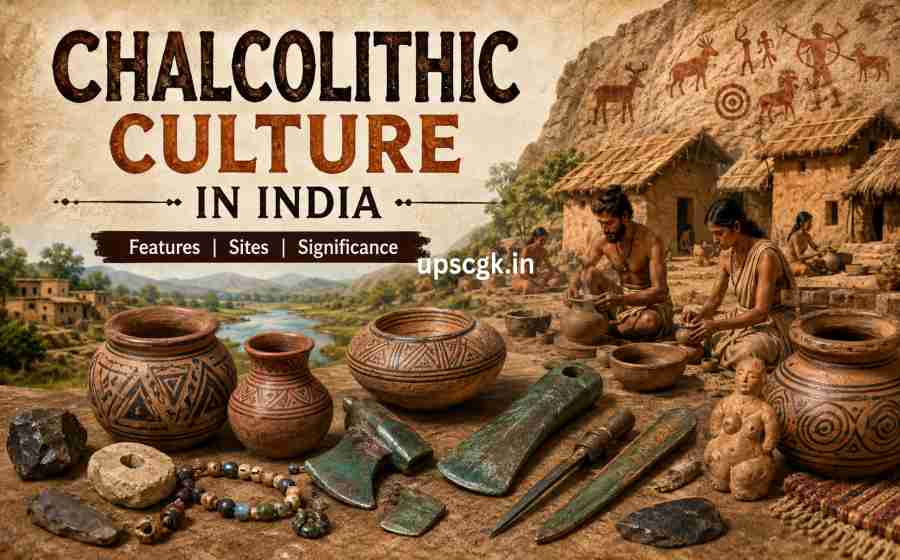
Explore Chalcolithic Culture in India, its features, major archaeological sites, economy, pottery, settlements and significance in Indian history.
Chalcolithic Culture in India
The Chalcolithic Age, also known as the Copper-Stone Age, represents an important phase in the cultural and technological development of ancient India. The term “Chalcolithic” is derived from the Greek words khalkos (copper) and lithos (stone), indicating the simultaneous use of copper and stone tools. This period bridges the gap between the Neolithic Age and the Iron Age and marks significant advancements in agriculture, craftsmanship, trade, and settlement patterns.
In India, the Chalcolithic period generally lasted from around 3000 BCE to 700 BCE, though its timeline varied across different regions. Numerous archaeological discoveries have provided valuable insights into the lives of Chalcolithic communities and their contribution to the growth of civilization in the Indian subcontinent.
Table of Contents
What is the Chalcolithic Culture?
The Chalcolithic Culture refers to a stage of human development when people began using copper tools alongside traditional stone implements. Unlike the urbanized Indus Valley Civilization, most Chalcolithic communities in India were rural and village-based. They relied on agriculture, animal husbandry, and small-scale trade for their livelihood.
The Chalcolithic cultures flourished in various regions, including Rajasthan, Maharashtra, Madhya Pradesh, Gujarat, and parts of South India. Different regional cultures emerged during this period, each with unique characteristics and traditions.
Major Features of Chalcolithic Culture
1. Use of Copper and Stone Tools
One of the defining features of the Chalcolithic Age was the use of copper tools along with stone implements. Copper axes, chisels, knives, and fish hooks were commonly used. However, since copper was expensive and not widely available, stone tools continued to be used extensively.
2. Agricultural Economy
Agriculture became the primary occupation of Chalcolithic communities. People cultivated crops such as:
- Wheat
- Barley
- Rice
- Lentils
- Millets
- Pulses
The availability of fertile land near rivers helped in the growth of farming settlements.
3. Animal Husbandry
People domesticated animals for food, transportation, and agricultural activities. Common domesticated animals included:
- Cattle
- Sheep
- Goats
- Buffaloes
- Pigs
Animal husbandry supplemented agriculture and played a crucial role in the economy.
4. Permanent Settlements
Unlike earlier nomadic groups, Chalcolithic people lived in permanent villages. Houses were usually made of mud, clay, wood, and reeds. Some settlements had planned layouts, storage facilities, and defensive structures.
5. Pottery and Craftsmanship
Pottery reached a high level of development during this period. Painted pottery with geometric designs became common. Potters used the wheel to create well-finished vessels for storage and domestic purposes. Crafts such as bead-making, weaving, metallurgy, and terracotta production also flourished.
6. Trade and Exchange
Evidence suggests that Chalcolithic communities participated in local and long-distance trade. Copper, beads, shells, and pottery were exchanged between different settlements, promoting cultural interactions.
7. Religious Beliefs
Archaeological findings indicate the worship of fertility symbols and mother goddesses. Terracotta figurines discovered at many sites suggest that religious practices were linked to agriculture and fertility.
Major Chalcolithic Cultures and Sites in India
Ahar-Banas Culture (Rajasthan)
The Ahar-Banas Culture flourished in southeastern Rajasthan.
Important Sites:
- Ahar
- Gilund
- Balathal
Features:
- Extensive use of copper tools
- Black-and-red ware pottery
- Agricultural economy
- Well-planned settlements
Kayatha Culture (Madhya Pradesh)
The Kayatha Culture developed in central India and is considered one of the earliest Chalcolithic cultures.
Important Site:
- Kayatha
Features:
- Copper tools and ornaments
- Distinctive pottery styles
- Agricultural and pastoral economy
Malwa Culture (Madhya Pradesh and Maharashtra)
The Malwa Culture emerged after the Kayatha Culture and spread over a wide area.
Important Sites:
- Navdatoli
- Eran
- Nagda
Features:
- Painted pottery
- Large village settlements
- Evidence of trade and agriculture
Jorwe Culture (Maharashtra)
The Jorwe Culture is among the most prominent Chalcolithic cultures in western India.
Important Sites:
- Jorwe
- Nevasa
- Daimabad
- Inamgaon
Features:
- Advanced agricultural practices
- Granaries and storage pits
- Planned houses
- Distinctive red pottery with black designs
Savalda Culture (Maharashtra)
This culture is considered one of the earliest Chalcolithic traditions in Maharashtra.
Important Sites:
- Savalda
- Bahal
Features:
- Mud houses
- Farming and animal husbandry
- Handmade and wheel-made pottery
Social and Economic Life
The social structure of Chalcolithic communities was largely village-centered. Families lived together and engaged in farming, animal rearing, and craft production. The economy was primarily agricultural, but specialized occupations such as pottery-making, metallurgy, and bead-making also emerged.
Storage pits and granaries indicate surplus production, which may have supported trade and social differentiation. The existence of burial practices suggests organized social customs and belief systems.
Significance of the Chalcolithic Culture
Transition to Advanced Civilizations
The Chalcolithic period served as a bridge between the Neolithic and Iron Ages. It introduced technological innovations and social changes that laid the foundation for future civilizations.
Development of Agriculture
Improved farming techniques led to stable food production, encouraging permanent settlements and population growth.
Advancement in Metallurgy
The use of copper marked the beginning of metal technology in many regions of India, paving the way for later developments in bronze and iron metallurgy.
Growth of Trade Networks
Trade connections among settlements promoted economic development and cultural exchange across different regions.
Emergence of Organized Communities
The establishment of villages, storage systems, and specialized crafts indicates the growth of more complex social and economic structures.
Summary
The Chalcolithic Culture in India represents a crucial stage in the evolution of human society. Characterized by the use of copper and stone tools, permanent settlements, agriculture, pottery, and trade, it laid the groundwork for future cultural and technological advancements. Archaeological sites such as Ahar, Kayatha, Navdatoli, Inamgaon, and Daimabad continue to provide valuable evidence about the lives of Chalcolithic communities. Understanding this period helps us trace the journey of ancient Indian civilization from simple village societies to more organized and advanced cultures.
Also Check: History