
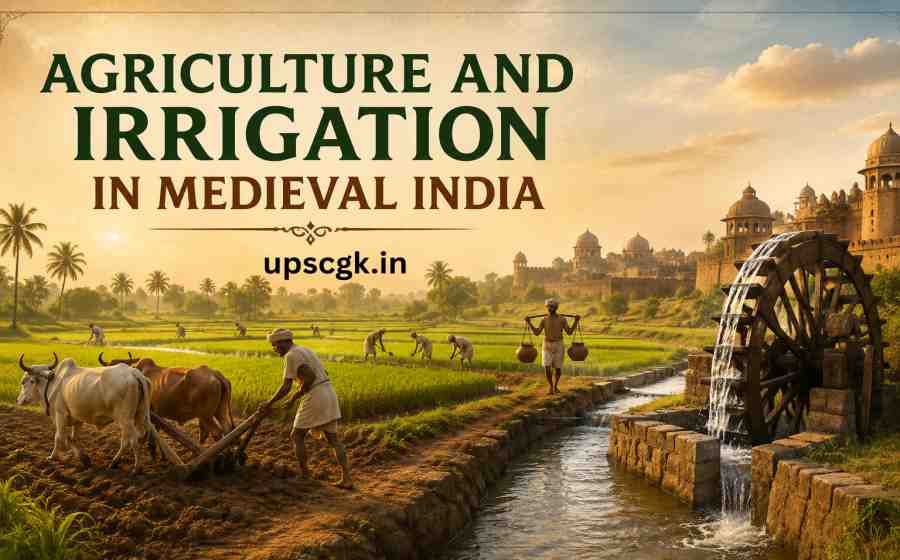
Explore agriculture and irrigation in Medieval India, including farming techniques, irrigation systems, major crops and their impact on the rural economy.
Agriculture and Irrigation in Medieval India
Agriculture formed the backbone of the economy in Medieval India, supporting the livelihood of the majority of the population. Between the 8th and the 18th centuries, farming remained the principal occupation despite political changes brought by various dynasties such as the Delhi Sultanate, the Vijayanagara Empire, regional kingdoms, and the Mughal Empire. Agricultural production not only sustained rural communities but also supplied food to expanding cities, military forces, and growing trade networks.
The success of agriculture during this period largely depended on the availability of water. Since many regions experienced irregular rainfall, rulers and local communities invested in irrigation systems such as canals, tanks, wells, and reservoirs. These water management techniques helped increase crop production and ensured food security even during years of uncertain monsoon rains.
Table of Contents
Importance of Agriculture in Medieval India
Agriculture was the foundation of Medieval India’s economy. Most villages were self-sufficient, producing grains, vegetables, fruits, oilseeds, and cotton. Farmers paid land revenue to the rulers, making agriculture the primary source of state income.
The prosperity of kingdoms often depended on successful harvests. Good agricultural output enabled rulers to maintain armies, build monuments, support artisans, and encourage trade. Consequently, many medieval rulers took active measures to improve farming and irrigation.
Major Crops Grown During the Medieval Period
The diversity of India’s climate allowed the cultivation of numerous crops across different regions.
Food Grains
Food grains were the most important agricultural products. The principal crops included:
- Rice, mainly cultivated in eastern and southern India.
- Wheat in northern and western regions.
- Barley in cooler areas.
- Millets such as jowar and bajra in dry regions.
Rice remained the staple food in Bengal, Odisha, Kerala, and Tamil Nadu, while wheat dominated the fertile plains of Punjab, Haryana, and the Ganga Valley.
Cash Crops
Cash crops became increasingly important due to growing domestic and international trade.
Important cash crops included:
- Cotton
- Sugarcane
- Indigo
- Sesame
- Mustard
- Flax
Cotton supported India’s flourishing textile industry, while indigo was exported to foreign markets as a valuable natural dye.
Fruits and Vegetables
Medieval farmers cultivated a variety of fruits and vegetables, including:
- Mangoes
- Bananas
- Coconuts
- Grapes
- Pomegranates
- Onions
- Garlic
- Brinjal
- Gourds
Many new fruits and vegetables were introduced through trade with Central Asia and Persia during the Sultanate and Mughal periods.
Farming Techniques
Although medieval agriculture relied heavily on traditional methods, farmers possessed considerable practical knowledge.
Wooden Ploughs
The wooden plough drawn by oxen remained the most common farming implement. It was simple but effective for loosening the soil before sowing seeds.
Crop Rotation
Farmers practiced crop rotation to maintain soil fertility. Different crops were grown in successive seasons to reduce nutrient depletion and improve productivity.
Use of Organic Manure
Animal dung, compost, leaves, and other natural materials served as fertilizers. These organic methods enriched the soil and improved crop yields without chemical inputs.
Seasonal Cultivation
Agricultural activities followed seasonal cycles:
- Kharif crops were sown with the arrival of the monsoon.
- Rabi crops were cultivated during the winter season.
This seasonal farming pattern continues in India even today.
Irrigation Systems in Medieval India
Rainfall alone could not support agriculture across the vast Indian subcontinent. Irrigation therefore became an essential part of farming.
Wells
Open wells were among the oldest and most common sources of irrigation. Farmers used buckets, leather bags, and simple lifting devices to draw water for nearby fields.
Tanks and Reservoirs
Southern India became famous for its extensive network of irrigation tanks. Kings of the Chola, Pandya, Kakatiya, and Vijayanagara kingdoms constructed thousands of tanks by building embankments across natural depressions. These reservoirs stored rainwater for use throughout the year. Many of these tanks continue to function even today.
Canals
Canal irrigation expanded significantly during the Delhi Sultanate and Mughal periods. One notable example was the renovation of old canals and construction of new ones under Sultan Firoz Shah Tughlaq. His administration developed several canals that supplied water to agricultural lands in northern India. Later Mughal rulers also maintained and extended canal networks in fertile regions.
Stepwells
In western India, particularly Gujarat and Rajasthan, stepwells served both irrigation and drinking water needs. These beautifully designed structures allowed people to access groundwater throughout the year.
Persian Wheel
The introduction and wider use of the Persian wheel greatly improved irrigation efficiency. This mechanical device used animal power to lift water continuously from wells into irrigation channels. It allowed farmers to irrigate larger fields and cultivate crops more effectively.
Role of Rulers in Agricultural Development
Several medieval rulers recognized that agricultural prosperity strengthened the state’s economy.
Delhi Sultanate
Some Sultanate rulers encouraged land cultivation by:
- Constructing canals
- Repairing irrigation works
- Clearing forests for farming
- Offering incentives to cultivate barren lands
Mughal Empire
The Mughal administration introduced better revenue records through reforms implemented during Emperor Akbar’s reign.
His finance minister Raja Todar Mal established systematic land measurement and revenue assessment. These reforms improved agricultural administration and encouraged cultivation.
The Mughal government also supported canal maintenance and promoted cultivation of valuable commercial crops.
Vijayanagara Empire
The Vijayanagara rulers invested heavily in irrigation projects.
Large tanks, canals, dams, and reservoirs were constructed across South India, transforming dry regions into productive agricultural zones.
Agricultural Taxes
Land revenue formed the largest source of income for medieval states.
Taxes were generally collected as a share of the agricultural produce or its monetary value. While efficient revenue systems increased government income, excessive taxation sometimes placed heavy burdens on farmers.
Crop failures due to drought or floods often created financial hardships, making irrigation even more important for ensuring stable production.
Agriculture and Trade
Agricultural surplus encouraged the growth of trade. Cotton, sugar, spices, rice, and indigo were transported to major trading centers and exported through Indian ports. This agricultural wealth supported merchants, artisans, textile industries, and urban development.
The expansion of both domestic and overseas trade during the medieval period was closely linked to successful agricultural production.
Challenges Faced by Medieval Farmers
Despite technological improvements, medieval farmers faced numerous challenges.
Some common difficulties included:
- Unpredictable monsoon rains
- Floods and droughts
- Pest attacks
- Heavy taxation
- Warfare and invasions
- Limited agricultural technology
Even under these conditions, village communities displayed remarkable resilience through cooperative irrigation management and traditional farming knowledge.
Legacy of Medieval Irrigation Systems
Many irrigation structures built during the medieval period continue to benefit agriculture today. Historic tanks, canals, stepwells, and reservoirs remain important examples of India’s engineering achievements.
These systems demonstrate the importance of sustainable water management and community participation in conserving natural resources. Modern irrigation projects continue to draw inspiration from several medieval techniques, especially rainwater harvesting and tank irrigation.
Summary
Agriculture and irrigation played a central role in shaping the economy, society, and political stability of Medieval India. Farmers cultivated a wide variety of crops using traditional knowledge, while rulers invested in canals, tanks, wells, and reservoirs to improve agricultural productivity. Efficient irrigation systems not only ensured food security but also supported trade, urban growth, and state revenues. The enduring legacy of these medieval water management practices highlights the ingenuity of India’s agricultural heritage and continues to offer valuable lessons for sustainable farming in the modern era.
Also Check: History