Discover the development and features of Mughal Painting, its famous artists, unique techniques, themes and lasting influence on Indian art and culture.
Mughal Painting
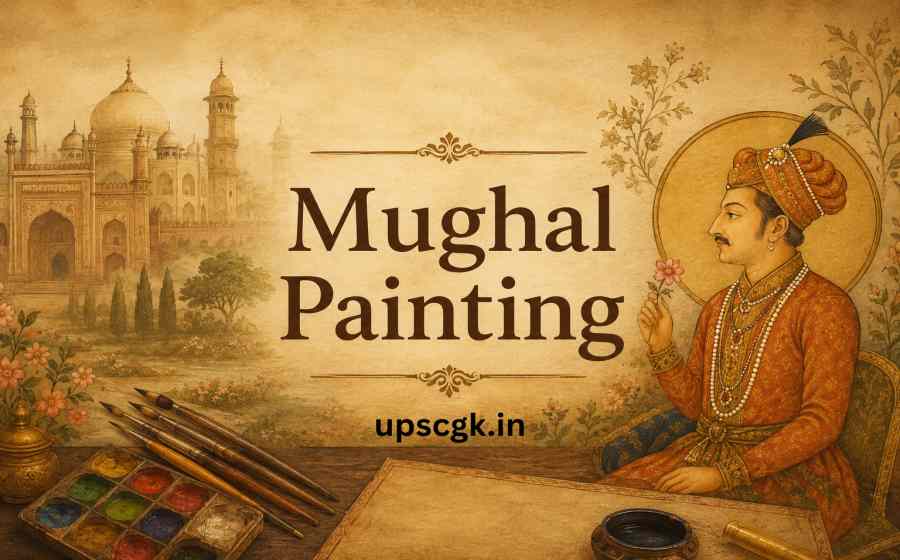
Mughal Painting is one of the finest achievements of Indian art and culture. It flourished under the patronage of the Mughal emperors between the 16th and 18th centuries. The Mughal school of painting combined the artistic traditions of Persia with Indian styles, resulting in a unique and sophisticated form of miniature painting. These paintings are admired for their realistic portrayal of human figures, detailed landscapes, vibrant colors, and elegant compositions.
The Mughal rulers considered art an important means of recording history, displaying royal grandeur, and expressing cultural refinement. As a result, Mughal painting became a symbol of the empire’s wealth, creativity, and cosmopolitan outlook. Its influence extended beyond the Mughal period and played a major role in shaping later schools of Indian painting, including the Rajput and Pahari styles.
Table of Contents
Origin and Development of Mughal Painting
The roots of Mughal painting can be traced to Persian miniature painting. Before the establishment of the Mughal Empire, Persian artists had developed a highly refined style of manuscript illustration. When Emperor Humayun was exiled to Persia after losing his kingdom, he came into contact with Persian artists and appreciated their artistic traditions.
After regaining his throne in 1555, Humayun invited two renowned Persian painters, Mir Sayyid Ali and Abd-us-Samad, to his court in India. These artists laid the foundation of the Mughal school of painting by training Indian artists and combining Persian techniques with indigenous artistic traditions.
Over time, Mughal painting evolved into a distinctly Indian style that incorporated local themes, landscapes, flora, fauna, and realistic human expressions while retaining Persian elegance and precision.
Development Under Different Mughal Emperors
1. Humayun (1530–1540, 1555–1556)
Humayun is regarded as the founder of Mughal painting in India. Although his reign was short and politically unstable, his stay in Persia exposed him to Persian artistic traditions.
His major contributions include:
- Bringing Persian painters to India.
- Establishing the imperial painting workshop (Kitabkhana).
- Encouraging the illustration of manuscripts.
The paintings produced during this period largely reflected Persian influence in style and composition.
2. Akbar (1556–1605)
The Mughal school reached its first golden age during the reign of Emperor Akbar. A great patron of arts and literature, Akbar established a large royal atelier employing more than one hundred painters from different parts of India and Persia.
Major developments during Akbar’s reign included:
- Collaboration between Hindu and Muslim artists.
- Illustration of historical texts, epics, and literary works.
- Introduction of Indian themes and natural surroundings.
- Greater realism and movement in paintings.
Some famous illustrated manuscripts prepared during his reign include:
- Hamzanama
- Akbarnama
- Razmnama (Persian translation of the Mahabharata)
- Ramayana
- Baburnama
Prominent painters included:
- Daswanth
- Basawan
- Kesu Das
- Miskin
- Farrukh Beg
Akbar’s period witnessed remarkable innovation, with Indian artists gradually moving away from purely Persian conventions.
3. Jahangir (1605–1627)
The reign of Jahangir is widely regarded as the golden age of Mughal painting. Jahangir himself possessed exceptional artistic knowledge and could identify the painter of a work simply by observing its style.
Painting during his reign became more refined, naturalistic, and elegant.
Key characteristics included:
- Exceptional realism
- Accurate portraiture
- Detailed studies of birds, animals, and flowers
- Fine use of light and shade
- European artistic influences, especially perspective
Important artists of Jahangir’s court were:
- Ustad Mansur
- Abul Hasan
- Bishandas
- Govardhan
- Manohar
Ustad Mansur became famous for painting rare birds and animals with remarkable scientific accuracy.
4. Shah Jahan (1628–1658)
During Shah Jahan’s reign, Mughal painting continued to flourish but became more formal and decorative.
Major features were:
- Luxurious court scenes
- Royal ceremonies
- Portraits of nobles
- Rich costumes and jewelry
- Highly polished compositions
The artistic emphasis shifted from natural studies to showcasing imperial grandeur and elegance.
5. Aurangzeb (1658–1707)
Aurangzeb showed little interest in painting and significantly reduced royal patronage.
As imperial support declined:
- Many artists left the Mughal court.
- Painters migrated to Rajasthan, Punjab, and the Himalayan kingdoms.
- Regional schools such as Rajput and Pahari painting flourished.
Although Mughal painting declined during this period, its artistic traditions survived through these regional styles.
Major Features of Mughal Painting
1. Miniature Style
Most Mughal paintings were miniature works created on paper. Despite their small size, they displayed extraordinary detail and precision.
2. Realism
Unlike earlier symbolic paintings, Mughal artists emphasized realistic representation of people, nature, animals, and architecture.
3. Portrait Painting
Portraiture became one of the most distinctive achievements of Mughal art. Emperors, princes, nobles, ambassadors, and saints were painted with remarkable likeness.
4. Rich Color Palette
Artists used bright yet balanced colors prepared from natural minerals, plants, and precious stones.
Common colors included:
- Red
- Blue
- Green
- Gold
- White
- Black
Gold was frequently used to enhance decorative elements.
5. Fine Brushwork
Mughal painters employed extremely fine brushes made from animal hair, allowing intricate detailing in clothing, jewelry, facial expressions, and vegetation.
6. Naturalistic Depiction
Plants, flowers, birds, animals, and landscapes were carefully observed and painted with scientific accuracy, particularly during Jahangir’s reign.
7. Persian and Indian Fusion
Mughal painting successfully blended:
- Persian elegance
- Indian realism
- Central Asian influences
- Later European techniques such as shading and perspective
This fusion gave Mughal painting its distinctive identity.
8. Historical Documentation
Many paintings served as visual records of important political events, royal ceremonies, military campaigns, and diplomatic meetings.
These artworks provide historians with valuable information about Mughal society.
Themes of Mughal Painting
The subjects of Mughal paintings included:
- Royal courts
- Battles
- Hunting expeditions
- Religious discussions
- Literary stories
- Persian romances
- Indian epics
- Festivals
- Portraits
- Nature studies
- Birds and animals
- Gardens
- Everyday life
Materials Used
Mughal artists used high-quality materials, including:
- Handmade paper
- Gold and silver leaf
- Natural mineral pigments
- Plant-based colors
- Fine squirrel-hair brushes
- Burnishing stones for smooth finishes
These materials contributed to the durability and brilliance of Mughal paintings.
Influence of European Art
During Jahangir’s reign, European missionaries and traders brought illustrated books and paintings to the Mughal court.
As a result, Mughal artists adopted:
- Perspective
- Light and shadow
- Three-dimensional effects
- Realistic facial modeling
However, they adapted these techniques without abandoning their own artistic traditions.
Decline of Mughal Painting
The decline of Mughal painting occurred due to several factors:
- Reduced royal patronage under Aurangzeb
- Political instability
- Weakening of the Mughal Empire
- Economic decline
- Migration of artists to regional kingdoms
Despite this decline, Mughal artistic traditions continued through Rajput, Pahari, Deccani, and Company schools of painting.
Legacy of Mughal Painting
The legacy of Mughal painting remains significant in Indian art history.
Its lasting contributions include:
- Development of realistic portraiture
- Preservation of historical events through visual records
- Influence on Rajput and Pahari painting
- Enrichment of manuscript illustration
- Advancement of naturalistic art in India
- Inspiration for modern miniature painting traditions
Today, Mughal paintings are preserved in museums and libraries across India and the world, where they continue to be admired for their artistic excellence and historical value.
Summary
Mughal painting represents a remarkable fusion of Persian elegance and Indian creativity. Beginning under Humayun, reaching its peak during Akbar and Jahangir, and continuing through Shah Jahan, it became one of the greatest artistic traditions in Indian history. Its realistic portraits, intricate details, vibrant colors, and masterful compositions continue to captivate art lovers and historians alike. Even after the decline of Mughal patronage, its influence endured through regional schools, ensuring that the legacy of Mughal painting remains an enduring symbol of India’s rich cultural heritage.
Also Check: History