Explore Mughal Administration through the Mansabdari and Jagirdari systems, their structure, functions, importance and impact on the empire.
Mughal Administration
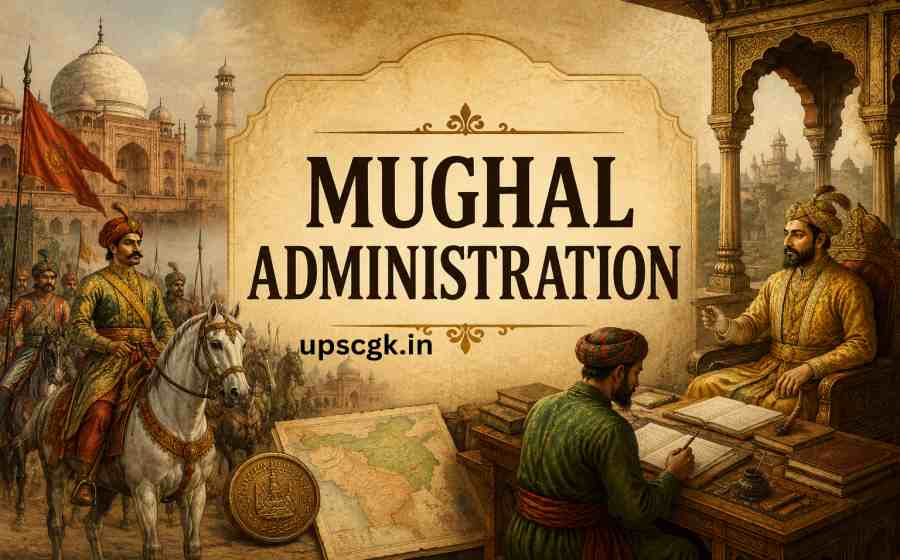
The Mughal Empire established one of the most organized administrative systems in Indian history. The rulers of the empire created strong political and military structures to maintain control over a vast territory. Among the most important administrative arrangements introduced during Mughal rule were the Mansabdari System and the Jagirdari System. These systems played a major role in military administration, revenue collection, and maintaining loyalty among officials.
The Mughal administration reached its most developed form during the reign of Emperor Akbar. He introduced several reforms to strengthen the empire and ensure efficient governance. The Mansabdari and Jagirdari systems became the backbone of Mughal administration and helped the empire expand and remain stable for many years.
Table of Contents
What was the Mansabdari System?
The Mansabdari System was introduced by Emperor Akbar around 1571–72. The word “Mansab” is derived from an Arabic term meaning rank or position. Under this system, every officer or noble in the Mughal administration was assigned a specific rank known as a Mansab.
The Mansabdari System was designed to organize civil and military administration. It determined the status, salary, and responsibilities of officials serving the empire.
A person who held a Mansab was known as a Mansabdar.
Features of the Mansabdari System
1. Ranking of Officials
Every Mansabdar was given a rank according to his position and importance. The rank determined his place in the administrative structure and his responsibilities.
Ranks could range from 10 to 10,000 or even higher in special cases.
2. Zat and Sawar
The Mansab rank consisted of two important components:
Zat:
The Zat rank represented the personal status and salary of the Mansabdar. It indicated the official’s position in the administration.
Sawar:
The Sawar rank indicated the number of cavalry soldiers a Mansabdar had to maintain.
For example, if a Mansabdar had a rank of 3000 Zat and 2000 Sawar, it meant he had a personal rank of 3000 and had to maintain 2000 cavalry soldiers.
3. Military Responsibility
Mansabdars were required to maintain troops, horses, weapons, and soldiers according to their rank. The emperor regularly inspected these soldiers and military resources.
4. Transfer Policy
Mansabdars were frequently transferred from one place to another. This policy prevented officials from developing strong local power and reducing the possibility of rebellion.
5. Salary System
Mansabdars received salaries either in cash or through land revenue assignments known as Jagirs.
Advantages of the Mansabdari System
The Mansabdari System provided several benefits:
- It created an organized administrative structure.
- It maintained discipline in the military system.
- It ensured loyalty towards the emperor.
- It reduced the risk of regional power centers.
- It helped in efficient management of the empire.
Limitations of the Mansabdari System
Despite its strengths, the system also had some weaknesses.
- Maintaining large cavalry forces was expensive.
- Corruption sometimes occurred among officials.
- Some Mansabdars submitted false records regarding soldiers and horses.
- Over time, financial pressure increased on the empire.
These issues gradually weakened the effectiveness of the system.
What was the Jagirdari System?
The Jagirdari System was closely connected with the Mansabdari System. Instead of paying all officials directly in cash, the Mughal administration assigned land territories called Jagirs to officers and nobles.
A Jagir was not private property. It was only a temporary land assignment given by the emperor. The person who received a Jagir was called a Jagirdar. The Jagirdar had the right to collect revenue from the assigned land area, but ownership remained with the state.
Features of the Jagirdari System
1. Revenue Collection
Jagirdars collected land revenue from farmers and used part of it to maintain troops and administrative duties.
2. Temporary Assignment
Jagirs were generally temporary and could be transferred by the emperor at any time.
3. No Ownership Rights
Jagirdars did not own the land permanently. They only had administrative and revenue rights.
4. Connection with Mansabdars
Most Mansabdars received Jagirs instead of cash salaries. Thus, the Jagirdari System became linked with the Mansabdari structure.
Types of Jagirs
The Mughal Empire had different categories of Jagirs:
Tankha Jagir:
Assigned in place of salary.
Mashrut Jagir:
Given with specific conditions.
Watan Jagir:
Hereditary Jagirs mainly granted to local rulers.
Altamgha Jagir:
Special Jagirs given as rewards.
Problems in the Jagirdari System
Although useful initially, the Jagirdari System later developed several issues.
Exploitation of Farmers:
Some Jagirdars collected excessive taxes from peasants to maximize revenue.
Frequent Transfers:
Because Jagirdars knew they would not remain long in one area, many focused on short-term gains rather than development.
Jagirdari Crisis:
During the later Mughal period, the number of Mansabdars increased while available Jagirs became limited. This created administrative and financial difficulties.
Relationship Between Mansabdari and Jagirdari Systems
The Mansabdari and Jagirdari systems functioned together. The Mansabdari System determined the rank and duties of officials, while the Jagirdari System provided the financial resources needed to support those officials.
The two systems formed the foundation of Mughal administration and contributed significantly to the empire’s strength during its early and middle phases.
Summary
The Mansabdari and Jagirdari systems were among the most important administrative innovations of the Mughal Empire. These systems allowed the Mughal rulers to maintain military control, organize revenue collection, and govern a large empire effectively. However, over time, corruption, financial stress, and administrative problems weakened these systems and contributed to the decline of Mughal authority.
Also Check: History